
Author: Larrin
All About D2 Steel – Development, Use in Knives, and Properties
Thanks to Robert Erickson, knifeandgear_swiss, Dale Bushness, and Paul Hart for becoming Knife Steel Nerds Patreon supporters!
Update 10/22/2020: I now have an article with how to heat treat D2, PSF27, and CPM-D2 and it also includes toughness testing of each steel and edge retention testing of D2. https://knifesteelnerds.com/2020/08/31/how-to-heat-treat-d2-psf27-and-cpm-d2/
The Sharpest Youtube Channel in the World
Thanks to Rusty Craig, Dylan Curtis-Reeve, Brendan Porter, and Ian Cox for becoming Knife Steel Nerds Patreon supporters!
Kiwami Japan
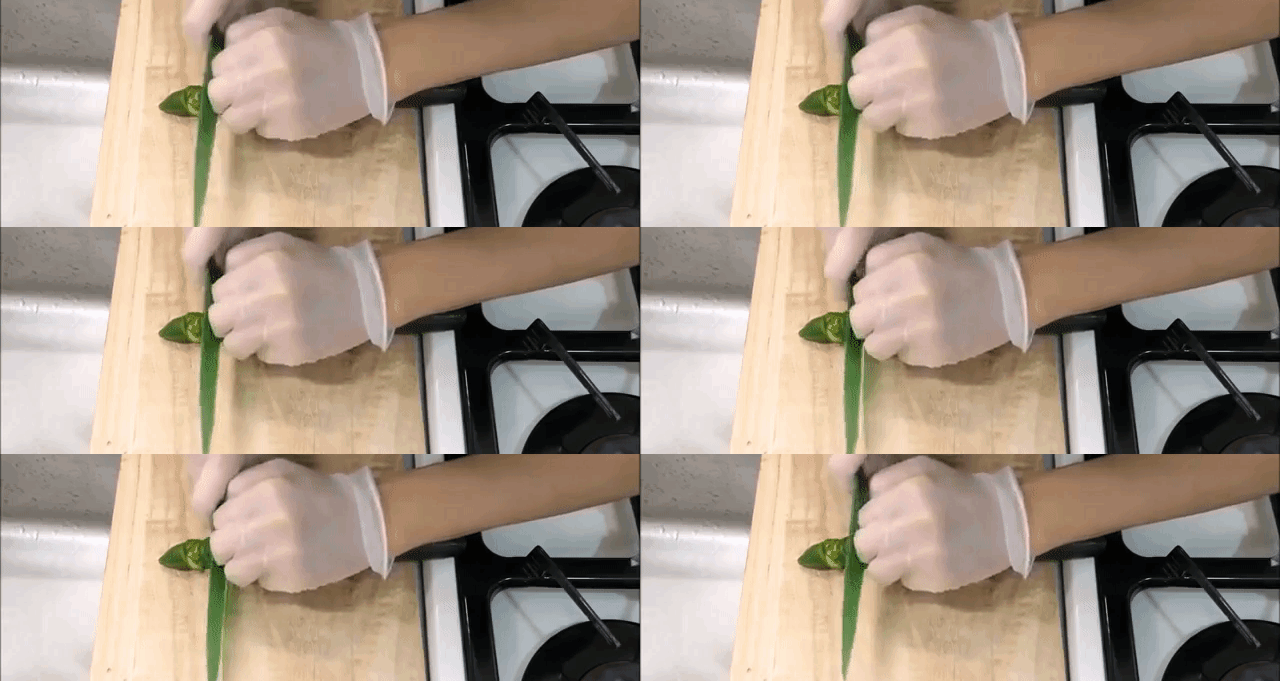
A popular Youtube channel called “kiwami japan” includes several videos of making knives out of unusual materials such as jello, pasta, chocolate, etc. The video on making a knife out of cardboard has over 20 million views which means that these videos have reached a broader audience than just knife makers or enthusiasts. As a materials engineer I find the videos interesting from a materials perspective, but they are entertaining in other ways as well. The videos are a bit quirky so I decided to take a dive into these videos and try to figure out what is going on. I also e-mailed the person who makes the videos and he answered a few of my questions. I will refer to him as “Kiwami” for the rest of this article though I know that is not his name. Kiwami means extreme in Japanese.
Silicon Additions for Improving Steel Toughness
Thanks to Colin Shannon and Robert Williams for becoming Knife Steel Nerds Patreon supporters!
High Toughness Steels
There are a series of shock resisting steel designed for high toughness (see this article to learn about toughness). A popular one is S7, an air hardening steel that can reach relatively high hardness. Another steel in the “S” series, S5, is reported to be even tougher [1][2][3][4]:

New Steel Analysis – Damasteel N11X and Damacore DC18N
Thanks to Bob Kramer, Jason Stone, Jeff Freeman, Austin Nader, Mark McKinley, and The_Iron_Joe for becoming Knife Steel Nerds Patreon supporters! We now have over 50 patrons!
N11X and Damacore DC18N
Last month I released an article about nitrogen-alloyed knife steels. After I posted the article I was informed about a new Damasteel product that includes a nitrogen-alloyed stainless steel as the core in a san-mai damascus steel product. At the time there was no information on the core steel other than its name: Damacore DC18N refers to a product with a core of “N11X” nitrogen steel and has san-mai damascus sides of RWL34 and PMC27 (their standard damascus mix without a core steel). Damasteel has recently released a datasheet for the new product which has provided more information: http://damasteel.se/wp-content/uploads/2018/06/Data-Sheet-Martensitic-Damacore-Final-Version.pdf

How I Became a Knife Steel Metallurgist
Thanks to Jon Broida of Japanese Knife Imports and Anton Kudris for becoming Knife Steel Nerds Patreon supporters!
When I was 16 I went with my father to the Las Vegas Custom Knife show. My interest in custom knives up to that point had been pretty limited. My father, Devin, has run a Damascus steel business for as far back as my memory goes. I remember looking at the A.G. Russell catalog and seeing some of the cool knives. I remember wanting a pocket knife, but I don’t remember being any more interested in knives than I was in, say, Vans shoes. At the knife show, however, my perspective changed. There was table after table of custom knives and custom knifemakers all with different styles and stories to sell their knives. Knifemakers come in all different types from the aw-shucks cowboy to the intense self-defense salesmen. I was most interested in the knifemakers that were making claims about the superior performance of their knives. From the lockup, to edge geometry, to steel, etc. there were barkers promoting it all. I spoke to a man who claimed that he had a proprietary steel for his fillet knives that was better than any other available. He flexed the knives 90° to demonstrate the superiority of the steel. Another knifemaker boasted about his extensive heat treatment protocol that would lead to the best performing hunting knives available.

Super Steels vs Regular Knife Steels
Thanks to Daniel Jackson for becoming a Knife Steel Nerds Patreon supporter!
Super Steel
I see frequent references to “super steel” online, and I was curious about how long that terminology has been around. I did searches on bladeforums as it is one of the oldest knife forums. The number of references to “super steel” has increased over time, but so have the number of posts on bladeforums. I saw how many references to “super steel” there were in each year, and then as a proxy to how many posts there were on bladeforums I did a search for “154” and saw how many references there were each year. Google tops out at 200 results but at that point the dataset was big enough to get an idea:
What is Edge Stability? Part 2 – The Experiments
Thanks to Gary Creely and Sans Jeux for becoming Knife Steel Nerds Patreon supporters!
Background
Read Part 1 before this article as it covers the ideas behind the Edge Stability theory and how things like hardness of steel, carbide volume, and carbide size are thought to affect knife edges. Then you will have an understanding of what we are looking for in the experiments described below.
Nitrogen-Alloyed Knife Steels
Thanks to Matthew Hoffman, Tryggvi, and Ron Dillon for becoming Knife Steel Nerds Patreon supporters!
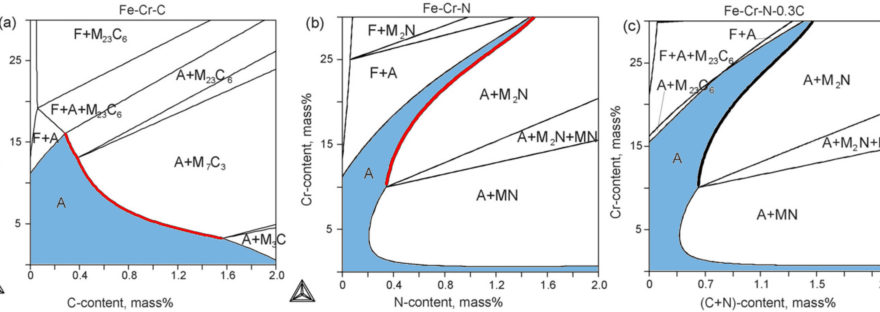
In previous posts I have written about the process by which steel is hardened. The steel is heated to a high temperature phase called austenite, where carbides are dissolved and carbon goes into solution in the austenite. During rapid quenching the carbon is trapped between the iron atoms and a phase called martensite is formed. Martensite gains its high hardness from the distortions to the atomic structure that come from carbon in between the atoms.
Carbon vs Stainless Steel in Knives
Thanks to Matt Davidson and Barton Smith for becoming Knife Steel Nerds Patreon supporters! I put in the order for the small impact tester for knife edges. The purchase of the impact tester was decided by Patreon voting members and purchased with money from Patreon supporters.
Ranking the Steel Ranking Articles
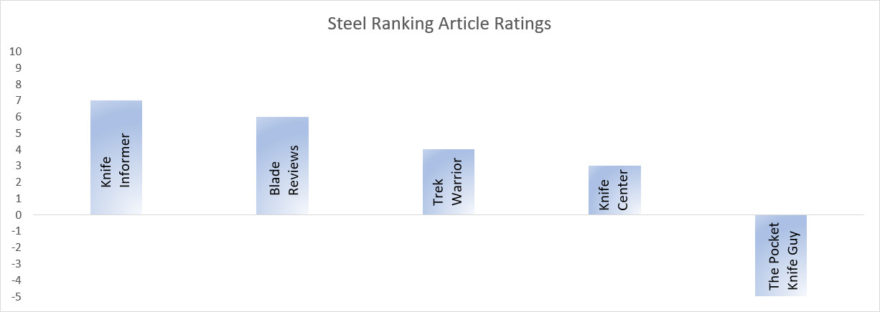
Note: I now have a steel ratings article of my own, read it here: Knife Steels Rated by a Metallurgist
Intro
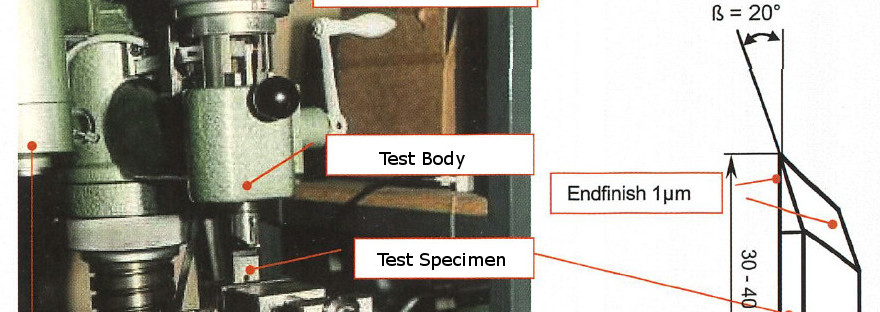
Thanks to Stacy Apelt for becoming a Knife Steel Nerds Patreon supporter! Based on a poll of Knife Steel Nerds Patreon voting members, we have decided to purchase a small impact tester for knife edges. This will allow us to study the effects of steel, heat treatment, edge geometry, sharpness, etc. on chipping and rolling of edges.