New Patreon Supporters
Thanks to new Knife Steel Nerds Patreon supporters David, A.P. McC., Brunhard, Sal Glesser, Richard Airey, Dan Cifer, Matt Cheresh, and Mark Decherd. Your contributions mean more experiments on knife steel!
Video
There is a video version of the following information as well:
Properties
When it comes to knife steels there is a whole range of properties that we might want to achieve, such as:
- Hardness
- Toughness
- Wear Resistance
- Corrosion Resistance
- Cost
- Forgeability
- Grindability
- Polishability
- Sharpenability
- Availability
- Marketability
Some of these properties are desirable to the end user, but some are mostly for the manufacturer. For example, properties like hardness, toughness, wear resistance, corrosion resistance, and sharpenability are all things you want in your knife steel. Some properties are desired by both buyers and makers, such as low cost. However, the costs are different for the maker than the buyer. A large part of the cost for the manufacturer is grinding and polishing. A steel may be relatively inexpensive but difficult to grind and finish and thus end up relatively expensive to use.
A few properties are things we may not think about regularly, such as availability and marketability. It can sometimes be an advantage to use a steel no one has ever heard of, perhaps pushing the exclusivity of the steel. However, there are generally advantages to a steel that is already well known and well regarded. It takes work to have to educate customers about why their unusual or unique steel is a good choice.
Availability is another aspect of steel that knife buyers typically do not think about. There are many, many steels that have been made over the years and many of them are no longer made. Finding it in a catalog somewhere doesn’t mean that you can buy it. Even when a company is making a steel, often those steels are not available in the sizes necessary for knives. Hot rolling steel to the thin sizes needed for knives is relatively uncommon. And some steels are widely available in certain countries or to certain customers but not to others. For a long time people were requesting that I test the common Chinese knife steel 8Cr13MoV, but it is primarily sold to knife companies (not individual knifemakers) in China (where I do not live). So despite 8Cr13MoV being very common in cheap knives, it is not as easy to get a bar of it as an individual living in the USA. And there are costs to importing steel from another country, such as shipping and tariffs. If a knife company or maker wants to market their knives as “Made in USA” they will want to use USA-made steel or they will have to market it as “Made in USA with foreign materials” instead.
We would love to have a knife steel that is a 10 out of 10 for every property – the unicorn steel that has ultimate hardness, toughness, wear resistance, corrosion resistance, is easy to forge, grind, and polish, and is super cheap at the same time. Of course we know it isn’t possible. So when developing and engineering a new steel it is a question of tradeoffs and which ones we are willing to make.
The Matched Set Method
Sometimes knife buyers get caught in the budgeting and minutiae of all of the different steel choices out there. Worrying about whether to use Elmax or S30V is about two choices within the same “category.” Often it is the bigger jumps that are significant, such as whether you need a steel with high toughness to resist breaking and chipping or high wear resistance for slicing edge retention. The first time I am aware of where a steel company made this clear was Carpenter with their “Matched Set Method” which they introduced in 1935 [1], and is described in the 1937 book Tool Steel Simplified.
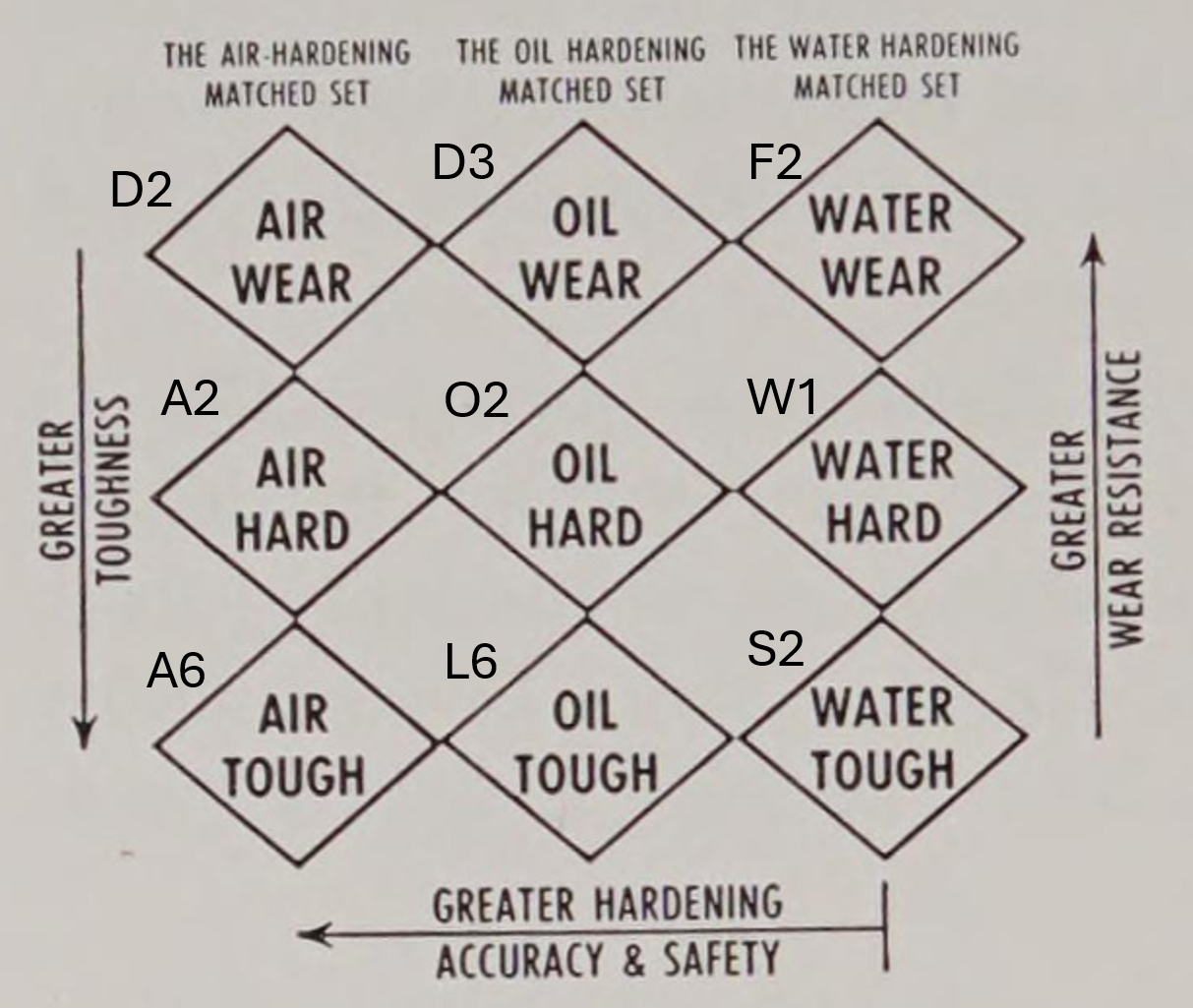
In the chart above I labeled each with their AISI designations (A2, D2, etc.) but otherwise it is unmodified from 1937. The categorized steels by high wear resistance (wear), high toughness (tough), and balanced properties (hard). To get high wear resistance you have to give up some toughness and vice versa. And they are also categorized by “hardenability,” which is a measure of how fast you need to quench a steel to achieve full hardness, either water, oil, and air for the quenching medium required. Water hardening steels were cheaper but required fast quench speed, were prone to distortion because of those fast quenches, and couldn’t be used for larger tools requiring through-hardness. In the knife world, water or oil hardening grades are favored by forging bladesmiths because of how easy it is to forge them.
Generational Breakthroughs
Of course I don’t mean to imply that there is never a reason to develop improved versions for different categories, or to create steels that sit in the middle between two different categories. There were generational improvements just to lead to the original Matched Set Method. For example, before the late 1800s all steels were “carbon steels” as carbon was the only element really added to them. “Water wear” F2 tool steel was developed by adding 3.5% tungsten to form hard tungsten carbides for wear resistance. Air hardening steels came by adding significant chromium additions, which also led to higher wear resistance from the formation of chromium carbides. The discovery of alloying was one of the most important transition points in steel history, which you can read more about in my book The Story of Knife Steel. The existence of high chromium steels also led to the development of stainless steels, very important to knives of course. The first stainless steel ever commercialized was intended for use as a knife steel. To understand what I mean by generational improvements and to get a feel for what is possible for future improvements I am going to discuss several prior improvements in this article.
Another important breakthrough occurred in the 1960s and 1970s with the introduction of powder metallurgy technology. With powder metallurgy they solved the issue of large carbides and inconsistent properties in steel by skipping the part where the liquid steel slowly cools down in a mold. Instead, the liquid steel comes out of a nozzle in a stream that is sprayed with gas so that it rapidly solidifies into fine grains, or “powder” steel. The powder is then placed in a steel can under high temperature and pressure, called hot isostatic pressing (HIP) to turn it into a solid ingot. Crucible Steel in New York and Pennsylvania developed this process and they found great improvements in toughness without any reduction in wear resistance by refining the microstructure with this process.
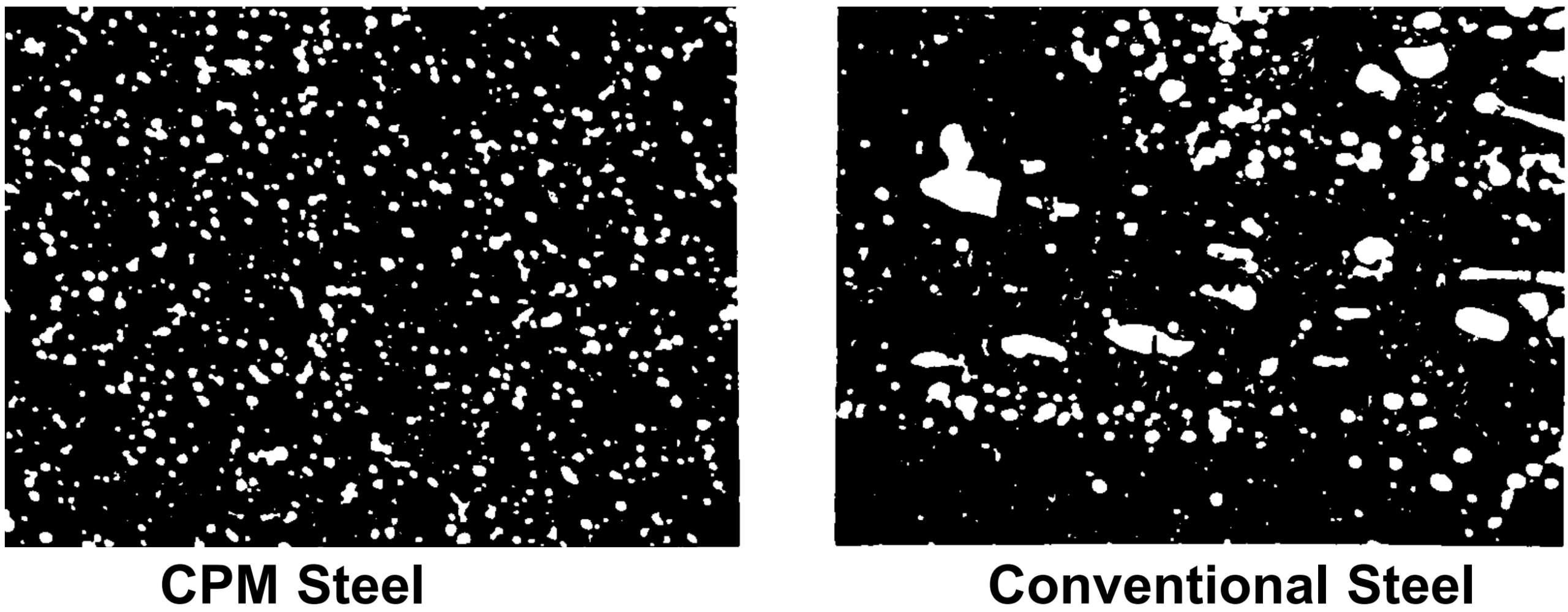
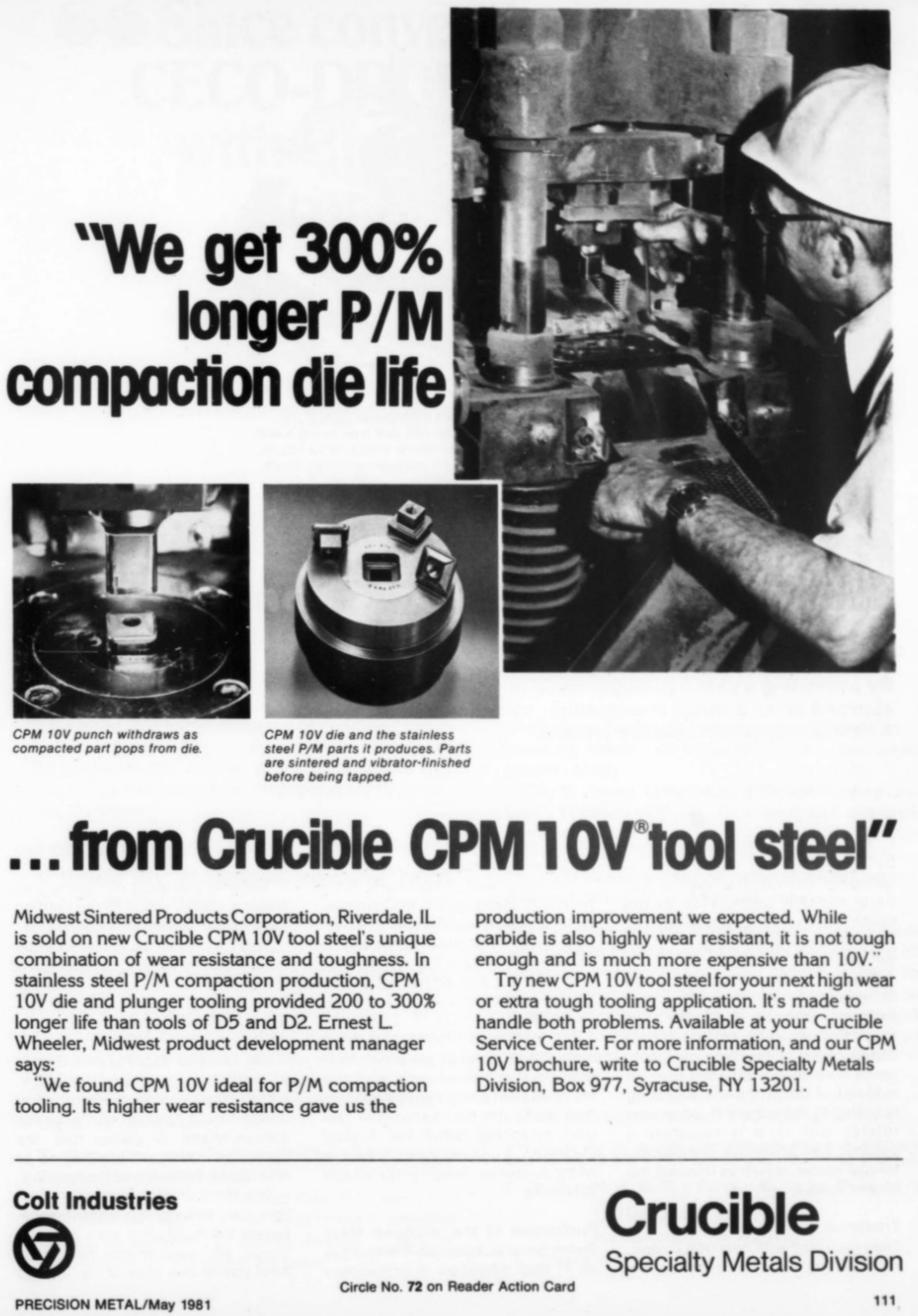
The technology wasn’t the only significant advancement, however. They also found that steels could be optimized for the PM process, as the best alloys for powder metallurgy were different than those optimized for conventional steelmaking. They first realized this when they found that M4 high speed steel went from being among the lowest toughness conventional high speed steels to the very toughest CPM high speed steel. They discovered that the high vanadium content went from being a liability to an asset. Vanadium carbides would form at high temperatures in solidification leading to large, brittle carbides. However, because powder metallurgy keeps the carbides small in solidification, it is the growth rate of the carbides that is important instead. Vanadium carbides are more stable than chromium (M7C3 and M23C6) and molybdenum/tungsten (M6C) carbides and so would grow at a slower rate during high temperature processing like HIPing and hot rolling. Vanadium carbides are also among the very hardest and thus contribute more to wear resistance than chromium and molybdenum/tungsten carbides. So the combination of high hardness of vanadium carbides (wear resistance) and small size (toughness) led to high vanadium steels having excellent properties. This eventually led to the development of CPM-10V in 1978 which was a tool steel with ~10% vanadium for incredibly high wear resistance while still maintaining equal better toughness than the popular D2 tool steel.
Powder Metallurgy Stainless Steels
Crucible used their knowledge of vanadium alloying in the development of CPM-440V (now called CPM-S60V), a modification of 440C with 6% vanadium and extra carbon to go with it. This steel was released around 1983. However, this steel did not have especially excellent toughness because it still had a large amount of chromium carbide, softer and larger carbides which were detrimental to the toughness-wear resistance balance. In 1995 CPM-420V was released (now called CPM-S90V), patented by William Stasko, Kenneth Pinnow, and John Hauser. They reduced the chromium content from 17 to 14%, and increased the vanadium content from 6 to 9%. This led to an improvement in both toughness and wear resistance vs S60V. CPM-S30V, released in 2002, used the same concept as S90V but reduced the vanadium to 4% for higher toughness (and lower wear resistance). S30V also utilized increased Mo (2% rather than 1%) and partially replaced carbon with nitrogen (0.2%), both for better corrosion resistance, ideas explored in the S90V patent but not ultimately used in the commercialized version. CPM-S110V and CPM-S35VN were released around 2009-2010 and these steels used niobium to refine the microstructure. Niobium was also found to improve corrosion resistance in S110V because it does not increase the amount of chromium carbide like vanadium does. Micrographs of how much finer the microstructure is of S110V than S90V can be seen below:
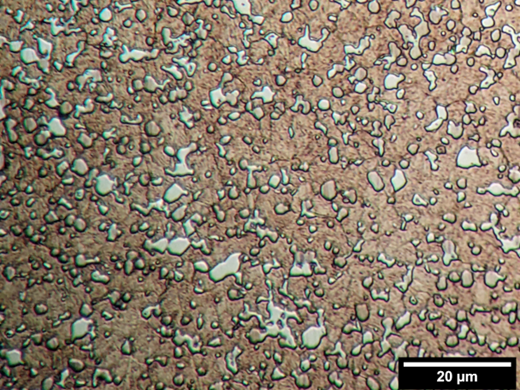
CPM-S90V
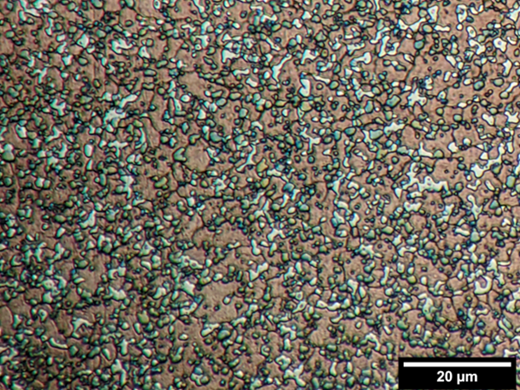
CPM-S110V
MagnaCut
MagnaCut used all of the previous developments in its design as long as one more – a further reduction in chromium. The above steels had about 10-12% chromium “in solution” which is the chromium that is not tied up in carbides and thus can contribute to corrosion resistance. So these steels still had more chromium than was strictly necessary for corrosion resistance with 14% chromium. And I also knew that the properties had been greatly improved by reducing Cr from S60V to S90V. So for MagnaCut I intentionally designed the steel to have sufficient chromium for good corrosion resistance and then balanced the rest of the composition to avoid chromium carbide formation. It used a combination of niobium and vanadium for small, hard carbides for wear resistance. This gave significantly improved toughness because the carbides were much smaller than those found in high chromium stainless steels. And the corrosion resistance was also greatly improved because chromium carbides were eliminated. Those chromium carbides act as sites for corrosion to initiate, because they create locally reduced chromium content in solution around each carbide.
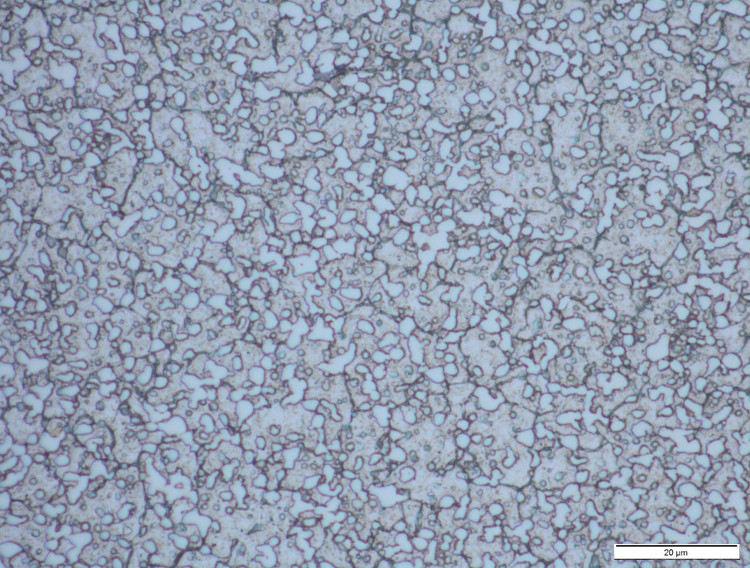
M390 – high chromium stainless powder metallurgy steel with relatively large carbides
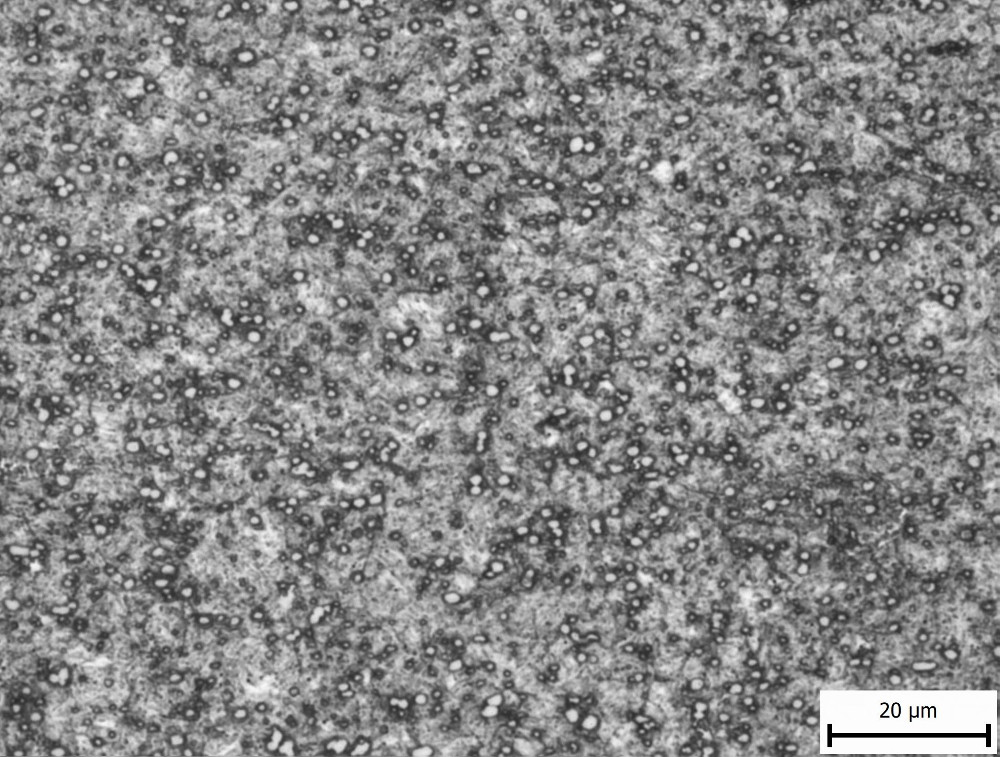
MagnaCut – much smaller carbides
This improved toughness-wear resistance balance from the microstructure improvement of MagnaCut gives it properties similar to the best non-stainless PM steels:
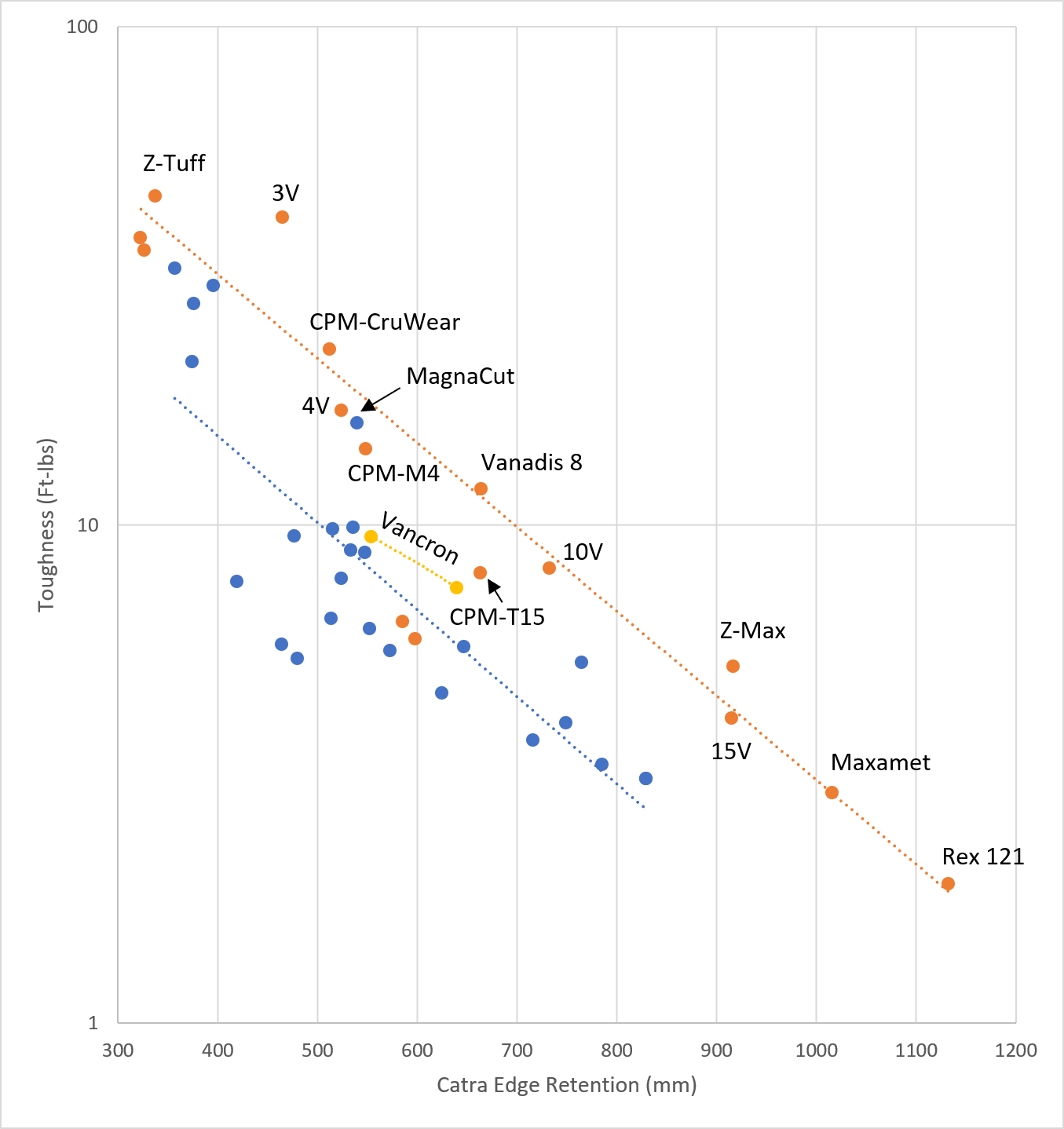
The chart above shows orange dots for non-stainless steels and blue dots for stainless PM steels. You can see that the toughness for a given level of CATRA edge retention (edge wear) is significantly lower for the stainless steels, apart from MagnaCut which overcame this previous gulf in properties. This was the result of a series of generational improvements, a simplified version of which being 420 -> 440A -> 440C -> S60V -> S90V,S30V -> S110V,S35VN -> MagnaCut. Big improvements in steel come when we can move up and to the right at the same time, an improvement in both toughness and wear resistance. When you add another constraint such as corrosion resistance or hot hardness, that makes it more difficult to achieve the highest balance of toughness and wear resistance. I have images in The Story of Knife Steel that show the evolutionary tree of different steel types such as this one for stainless knife steels:
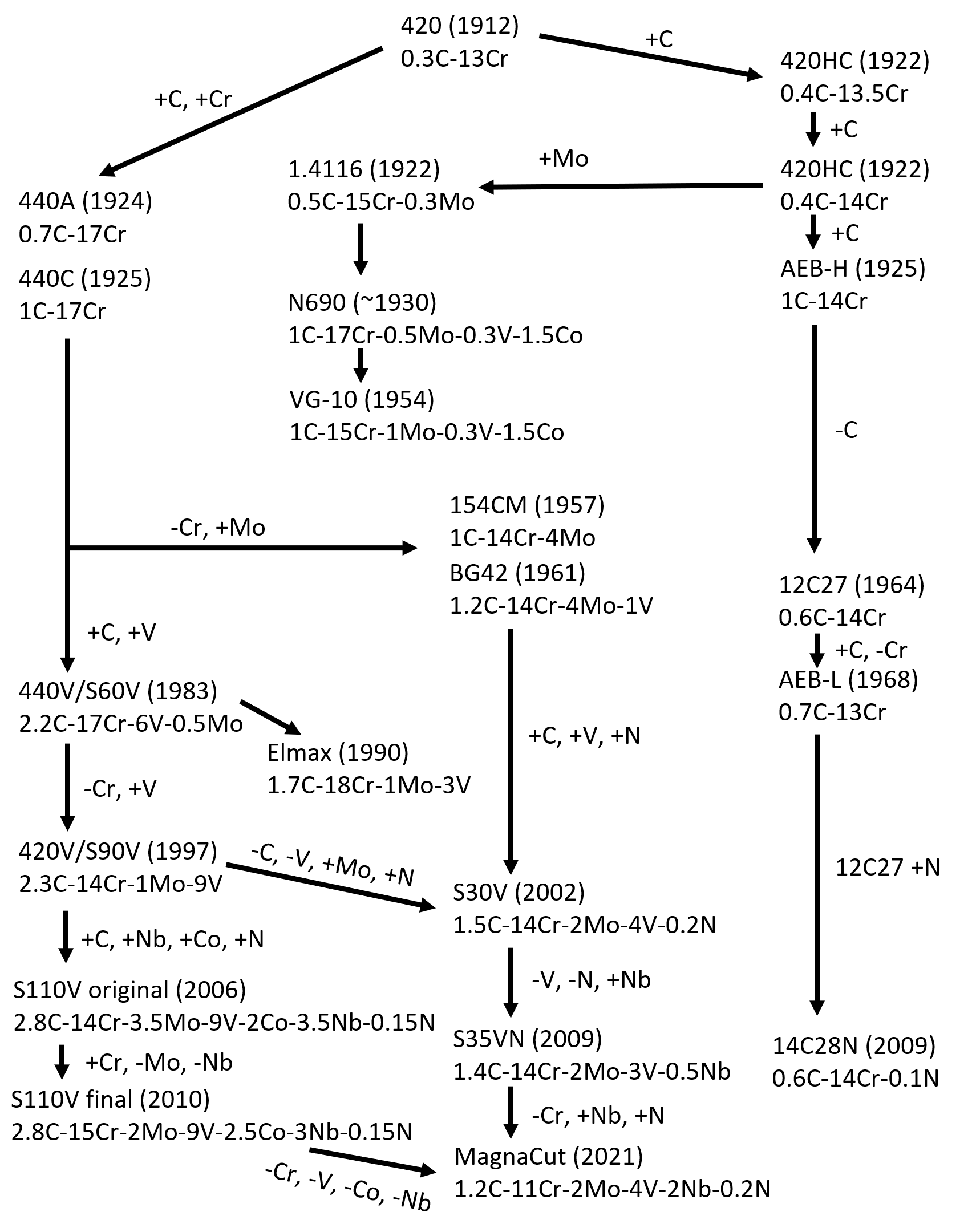
Not all of those grades (S60V, etc.) were an improvement in every category, but in general there was an improvement over time in terms of the balance of toughness, wear resistance, and corrosion resistance. It is difficult to improve all of these at the same time, or even two of the three at the same time, without affecting the others. But a true generational improvement comes when engineers figure out how to break through previous barriers, such as when MagnaCut managed to make it to the same toughness-wear resistance balance as the non-stainless PM steels.
MagnaMax
I chose to make MagnaCut a “balanced” steel in the realm of CPM-4V and CPM-CruWear. This meant it filled a niche that had not previously been filled. However, the alloy concept of avoiding chromium carbide and using only hard vanadium/niobium carbides could be used for other combinations of toughness and wear resistance. When I first proposed MagnaCut to Crucible and Niagara I also said that we could make a stainless version of CPM-10V with the same idea. That eventually led to MagnaMax which was recently released. MagnaMax has double the carbide of MagnaCut for significantly greater wear resistance.
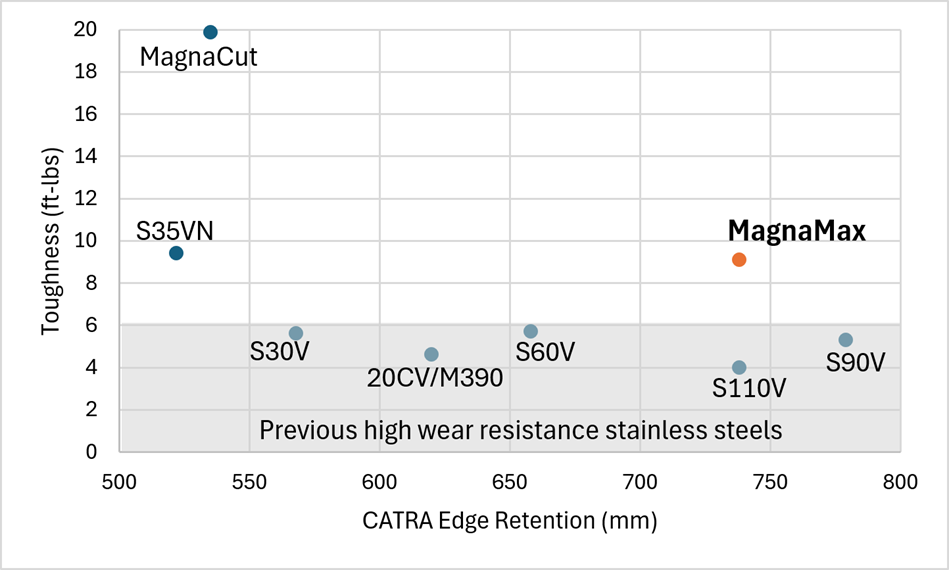
Magna-Family Steels
MagnaMax was the first addition to the “Magna-Family” of grades. I call it a family despite only having two steels because there are many other options. To be clear, I am not currently announcing new additions and none are coming in the short term. But the same concept could be used for a higher toughness version of MagnaCut, for example. Essentially the opposite direction of MagnaMax. Another balancing act in steels I have not yet discussed, however, is the balance between hardness and corrosion resistance.
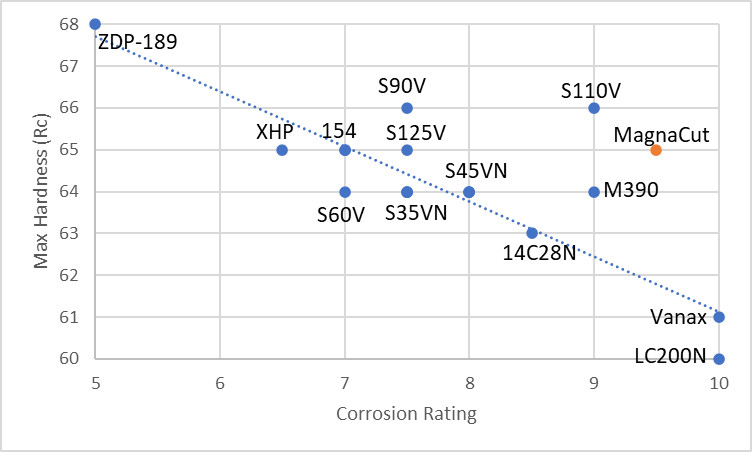
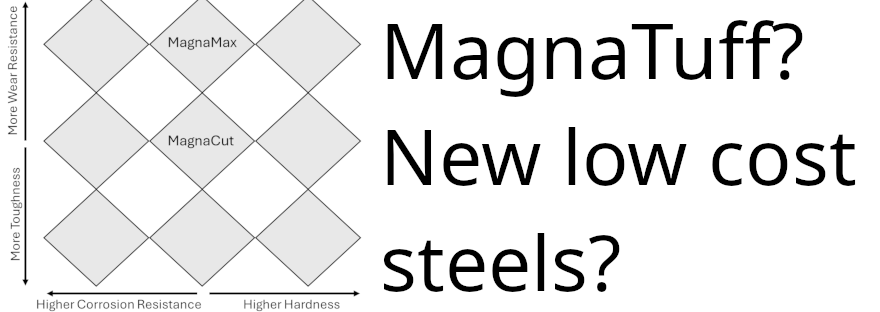
You can see that in general, higher hardness leads to lower corrosion resistance and vice versa. However, this is true when comparing steels, not for comparing hardness within a single steel. A steel can be heat treated to maximize hardness and corrosion resistance at the same time, as I have explained in the past. MagnaCut had improved hardness for its level of corrosion resistance because of its lack of chromium carbide. But modified versions could be made for higher hardness and reduced corrosion resistance or improved corrosion resistance at the cost of some hardness. Thus we would have a new “matched set” for the potential family of Magna-series steels:
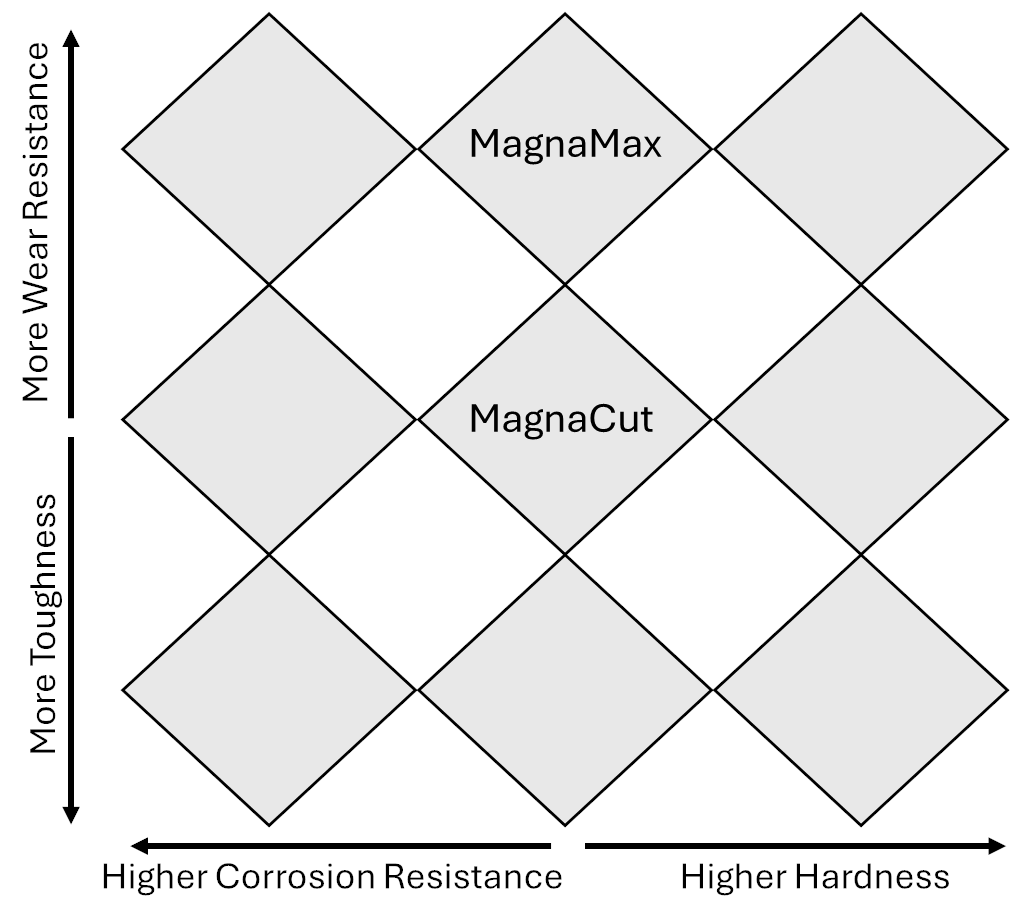
Again, I must be clear that I don’t actually believe we will release all of these. In fact, perhaps only the center steels will ever be released, since we hit a very good balance between hardness and corrosion resistance for MagnaCut and MagnaMax. However, it could be interesting to make the other versions for specific applications, either for high hardness stainless steels or to make improved “saltwater” stainless grades.
How Small of a Niche Can We Fill?
As I said when it comes to all of the potential variations of MagnaCut, just because we can fill a niche doesn’t mean we can or should. Having too many available grades can make things confusing to customers and increase logistical complexity. Unfortunately I don’t have the power to eliminate old steels to replace with the new better ones to lead to a simpler market. With too many available grades there can also be a situation where it doesn’t make monetary sense to make certain niche products. It costs money to develop a new product and the return on investment may not be worth it if the resulting sales are not great enough. So unfortunately there are often real-world limitations to just how many steels it is possible to develop and release.
Copies and Small Modifications
When I see people complaining about “too many new knife steels” often this is partly out of confusion. They don’t realize that many of the “new” steels are several (or more) years old and were not well known for knives prior. Many “new” steels are older steels released under a new name by a different company or in a different country. And many consumers have a hard time keeping up with all of the compositions and names, and don’t know how to interpret a steel composition to know when something is the same. I have seen many knife enthusiasts on forums or social media where they misunderstood that a small difference in published silicon, or a minor element like manganese not being listed, does not mean that the steel is different. But even outside of straight copies, many new steels are only small modifications of prior products. Here is a list of new steels over the past decade (outside of steels I have developed):
- Nitro-V (2017) – minor modification of AEB-L
- S45VN (2019) – S35VN with added chromium and nitrogen
- M398 (2019) – M390 with more carbon and vanadium
- SPY27 (2020) – Spyderco-exclusive CPM stainless steel with 1.5% Co
- AR-RPM9 (2020) – China-produced sprayform version of 9Cr18MoV (440)
- XEOS (2022) – Takefu modified 440 grade with higher Mo
- H2 (2022) – replacement for Spyderco’s earlier H1 austenitic stainless
- STRIX (2023) – Takefu powder metallurgy stainless for 64-65 HRC
- K888 (2024) – CPM-1V with added cobalt
- Nitro-X7 (2024) – their earlier Nitro-B with higher carbon
- A-421 (2025) – Carpenter conventional stainless steel with small amount of TiC
- Aigami (2025) – Hitachi conventional stainless for higher hardness than GIN5 (AEB-L)
The degree of change for each of these varies, with some being very tiny to a few being relatively significant. The majority are small to medium modifications of prior grades. This list does not include any “new” grades which are simply copies. I don’t think I would characterize any of those grades as “generational improvements.” Those are difficult to achieve, of course. But when it comes to predicting the future of steel development, the majority of it is going to be products like those above, and many of the new grades will be copies and minor modifications.
Grades for Forging
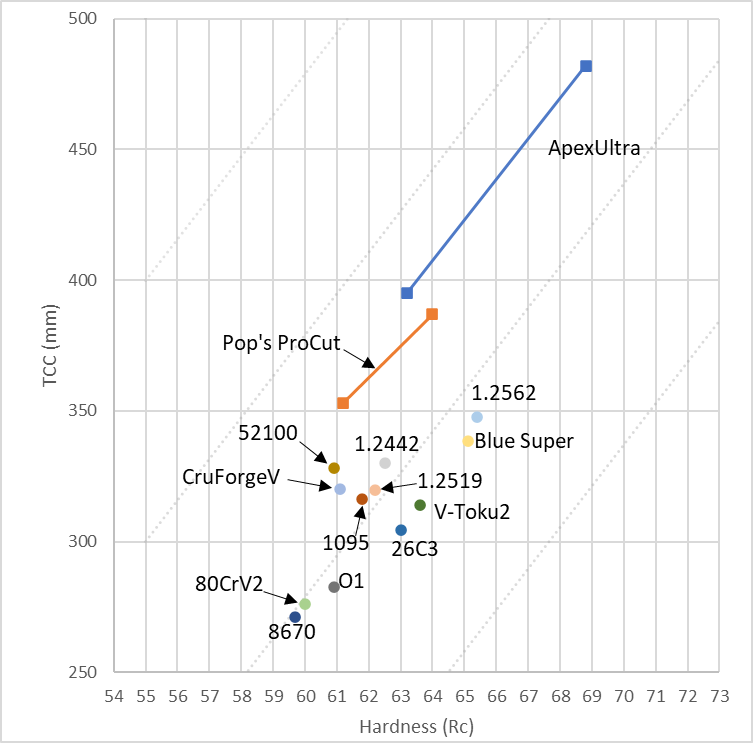
The pace of change for low alloy grades for forging has been pretty slow, and the majority of grades were developed over 50 years ago. One exception was CruForgeV, released in 2009. However, that grade was released at the same time as a Crucible bankruptcy and none has been made since. Some of it is still out there but in some ways it serves as a cautionary tale. I have been able to develop two grades for forging, Pop’s ProCut and ApexUltra. I do believe that both of these grades were able to deliver “generational improvements.” Pop’s ProCut used nickel alloying plus tungsten/vanadium alloying to deliver a new combination of high toughness with wear resistance that wasn’t previously available. Past high toughness forging grades like 15N20, 8670, and 5160 have extremely low wear resistance. ProCut was able to break through this barrier. It also provided a uniquely easy to heat treat design, with an austenitizing window that is over 200°F wide. This gave it a great combination of properties while also being “beginner friendly.”
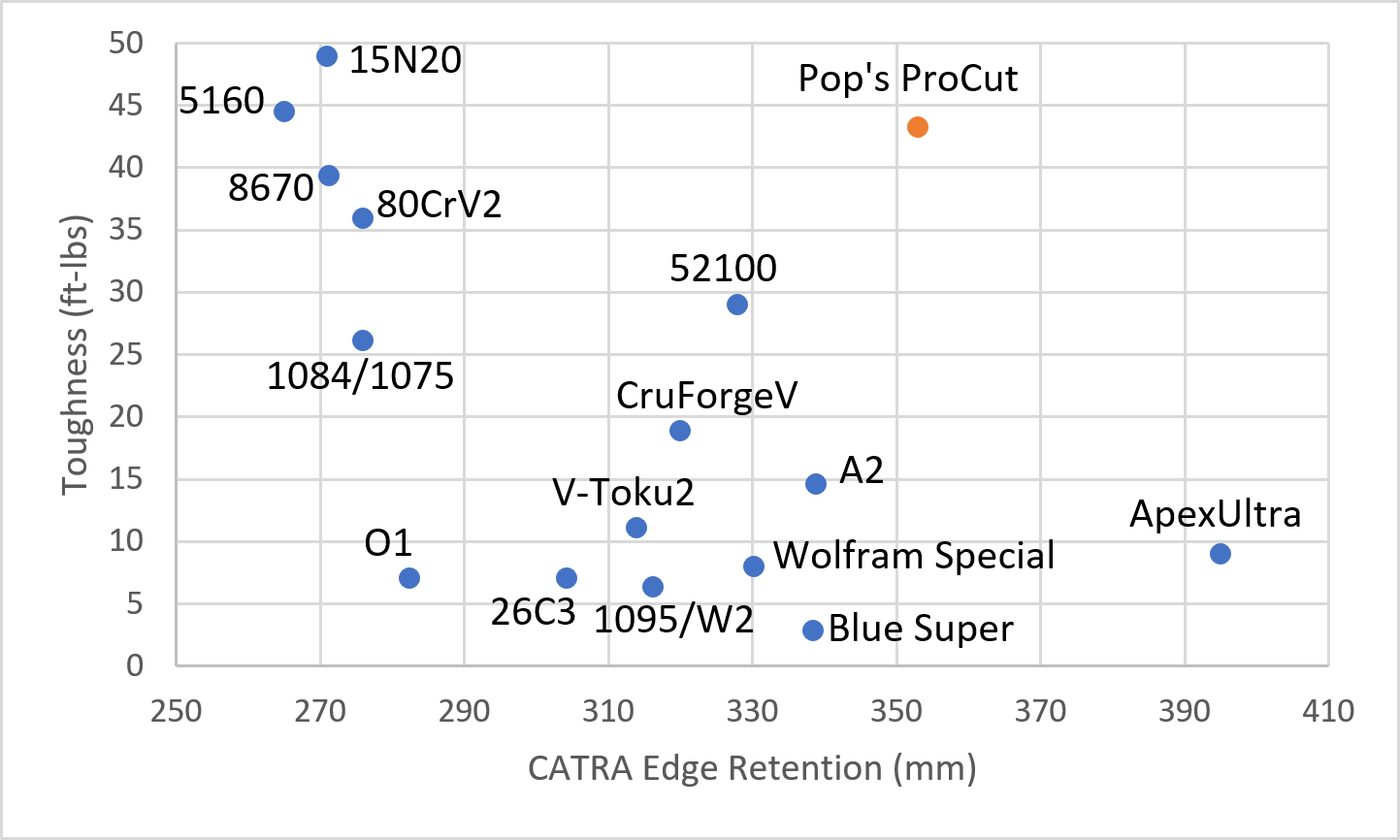
ApexUltra took a different track where the goal was to make a forging grade that maxes out cutting performance – achieving higher wear resistance and good toughness at high hardness than previous grades like Blue Super and 1.2562/F2. I had noticed that 52100 had a better toughness-edge retention balance than many other low alloy steels that are forgeable. The difference is in the 1.5% chromium content. The chromium has two major effects – 1) the iron carbides are enriched in chromium which increases their hardness and they contribute more to wear resistance. 2) the chromium decreases the amount of carbon in solution, making “plate martensite” less of an issue which makes steel brittle. So ApexUltra used the 1.5% Cr from 52100 in combination with the tungsten/vanadium additions of Blue Super to achieve edge retention greater than past low alloy steels.
More Grades for Forging?
There are different opportunities for forging grades but they might all suffer from the too-small-niche problem. Some possibilities include:
Powder metallurgy forging grade – A 2-4% vanadium PM low alloy steel would be interesting. It could offer even higher wear resistance than ApexUltra, likely with higher toughness as well. However, forging bladesmiths are historically very price conscious and they don’t like vanadium steels because of the extra difficulty in finishing. So ApexUltra is likely to be as good as it gets for now.
Hamon steels – To make a good hamon requires the steel to have very low hardenability with low Mn and no Cr or Ni additions. The standard choices are 1095, W1, and W2. Potentially hamon steels with different levels of toughness and edge retention could be made but again this application is likely too niche. Hamon steels are difficult to heat treat because of their low hardenability so outside of a hamon they are not really desirable.
Damascus – Pop’s ProCut works great in Damascus as a bright layer because of its high nickel – it can even be paired with ApexUltra for a high performance Damascus. A steel that matches the properties of ProCut generally but without nickel would be good for an easy to heat treat Damascus that offers relatively high toughness. However, the nickel-free version wouldn’t be better, it would just be good for a Damascus combo. So again the niche is likely too small.
A Modern Knife Steel Matched Set Recommendation
I first gave recommendations for knife steels in different categories in 2019. I updated these in Knife Engineering and again in the second edition. My current recommendations are as follows:

The grades in bold are those that I developed. This chart also gives us a place to discuss potential holes and areas that perhaps could be improved. Some holes that are still present:
The obvious one is the high wear resistance “extra stainless” category, which is the category I use for saltwater steels. Some knife companies have used MagnaCut in their knives designed for saltwater though I would prefer the corrosion resistance was even higher for those applications. Uddeholm used to make a Vanax 75 which had higher wear resistance than the current Vanax. A good solution for this category could potentially be a higher corrosion resistance version of MagnaMax.
Vanax and LC200N are pretty good steels. However, a higher corrosion resistance version of MagnaCut would have better toughness than Vanax.
I think it would be difficult to improve on Vanadis 8/K390/10V and CPM-CruWear. They have excellent toughness-wear resistance balances. Improving over that would require a generational improvement that we haven’t seen in the non-stainless PM space for several decades. It might require exploring unique solutions in terms of the matrix composition and carbide types.
The very high toughness non-stainless steels like Z-Tuff could use some improvements. All of those available have softer carbides such as chromium carbides or tungsten/molybdenum carbides. CPM-3V is very good and only has vanadium carbides but it could be argued it is more in the balanced properties than truly the maximum toughness category.
AEB-L/14C28N are excellent steels though we could have higher wear resistance in this category through a powder metallurgy steel with vanadium and/or niobium carbides. The high toughness Magna-family grade would fit this category.
Expanding the Envelope
My categories do not cover all possibilities. For example, there are higher wear resistance steels than those in my “high wear resistance” category. Examples would include steels like CPM-15V, Maxamet, CPM Rex 121, CPM S125V. We have been hearing that some of these may be going away like 15V and Rex 121. From what I know they never liked making S125V. The reason they may go away is that the temperatures required for making them are very high or carbides will form in the liquid, either leading to a large carbide size (not desirable with powder metallurgy of course) or even creating manufacturing issues like clogging the nozzle. The temperatures get high enough that the ceramic refractory is eroded by the liquid steel, requiring frequent relining. Not all steels are in danger of going away; I haven’t heard anything about Maxamet being in danger. But one thing that could be done would be to redesign steels around a certain temperature limit to try to make similar high wear resistance steels that do not have these manufacturing issues.
In terms of steels that have even higher toughness than my “high toughness” category I am not too interested in those. There have always been high toughness grades out there but at some point the wear resistance and/or hardness is low enough that it is not particularly useful for knives.
Steels Designed for Grinding and Finishing
Grinding and finishing are very important to knifemakers and manufacturers. High wear resistance steels and large carbide steels have low grindability. Finishing and polishing are especially sensitive to large carbides and high hardness carbides. Vanadium carbides are harder than typical abrasives like aluminum oxide. For highly finished and mirror polished knives, it is better to avoid significant vanadium and niobium additions. Since this limits us to softer carbide types the potential for generational improvements is limited. Here are my recommendations for steels that are easy to grind and polish:

There are many gaps in this table though that may not be a bad thing. Very high wear resistance steels with only soft carbides end up with very low toughness because they have so much carbide. I put ZDP-189 in the “high alloy” category rather than the “stainless” category because my corrosion testing showed very poor tests with this steel. A ZDP-189 that is actually stainless could work, especially in Japan. An “extra stainless” balanced steel – a more corrosion resistant CPM-154, may have some uses.
Cost and Conventionally Produced Steels
Many of the best steels in terms of properties are produced with powder metallurgy. However, this significantly increases the cost of producing these steels. Another factor for cost is that cost of abrasives and time in polishing can often exceed the cost of the steel. Here are my recommendations for low cost steels:

I struggled a bit with some of these categories. The high toughness S7 is somewhat limited in hardness, generally under 60 HRC. The biggest debate in my mind internally was what to put for “balanced” stainless and ended up with 8Cr13MoV. It gives up quite a bit of toughness to get a small wear resistance improvement over AEB-L and 14C28N. I think significant improvements could be possible in this category. For example, I worked on a grade called NioMax in lab-sized quantities even before working on MagnaCut. In small quantities it had similar toughness to AEB-L/14C28N but with enhanced wear resistance. As of yet it has not been released.
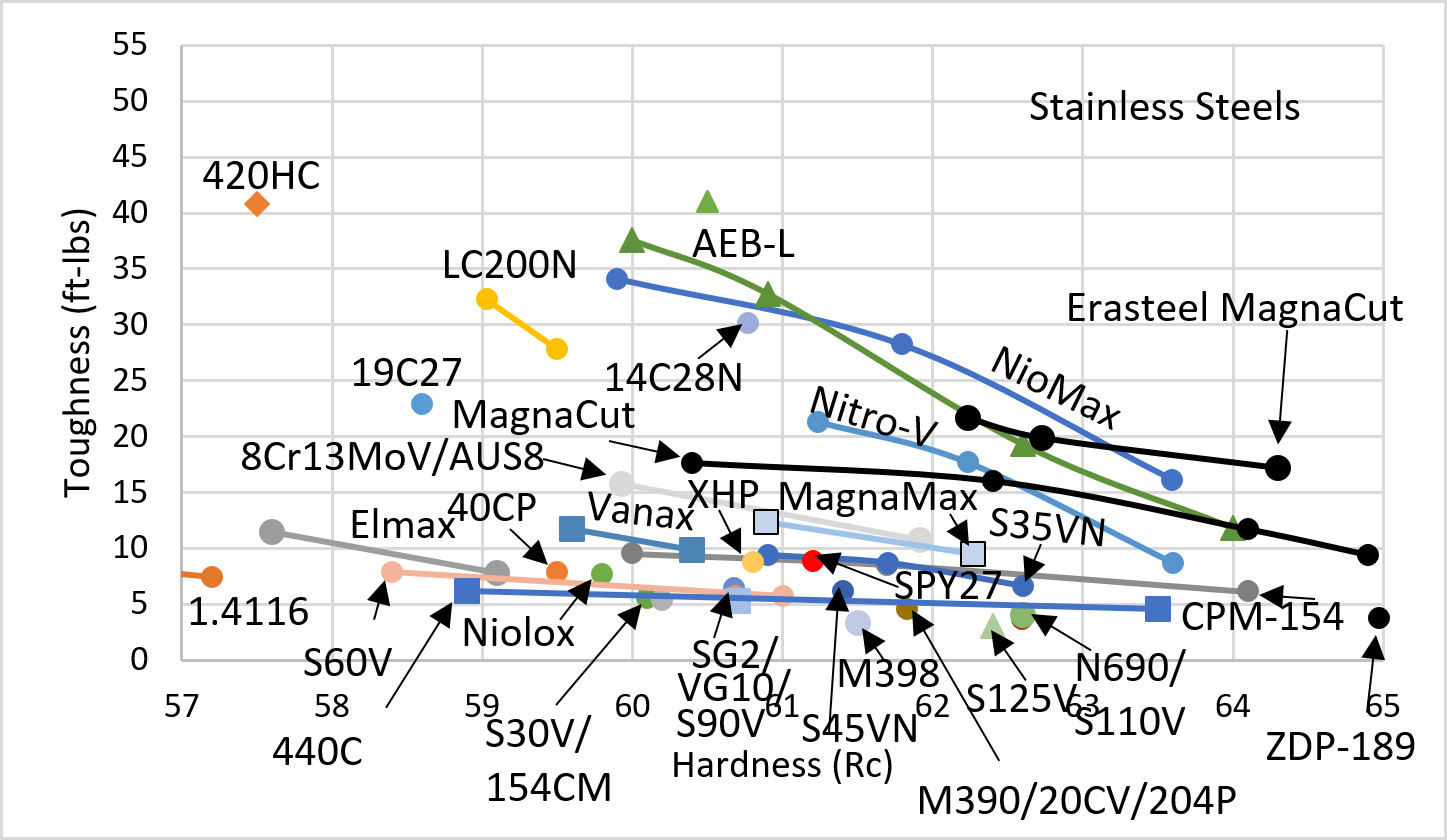
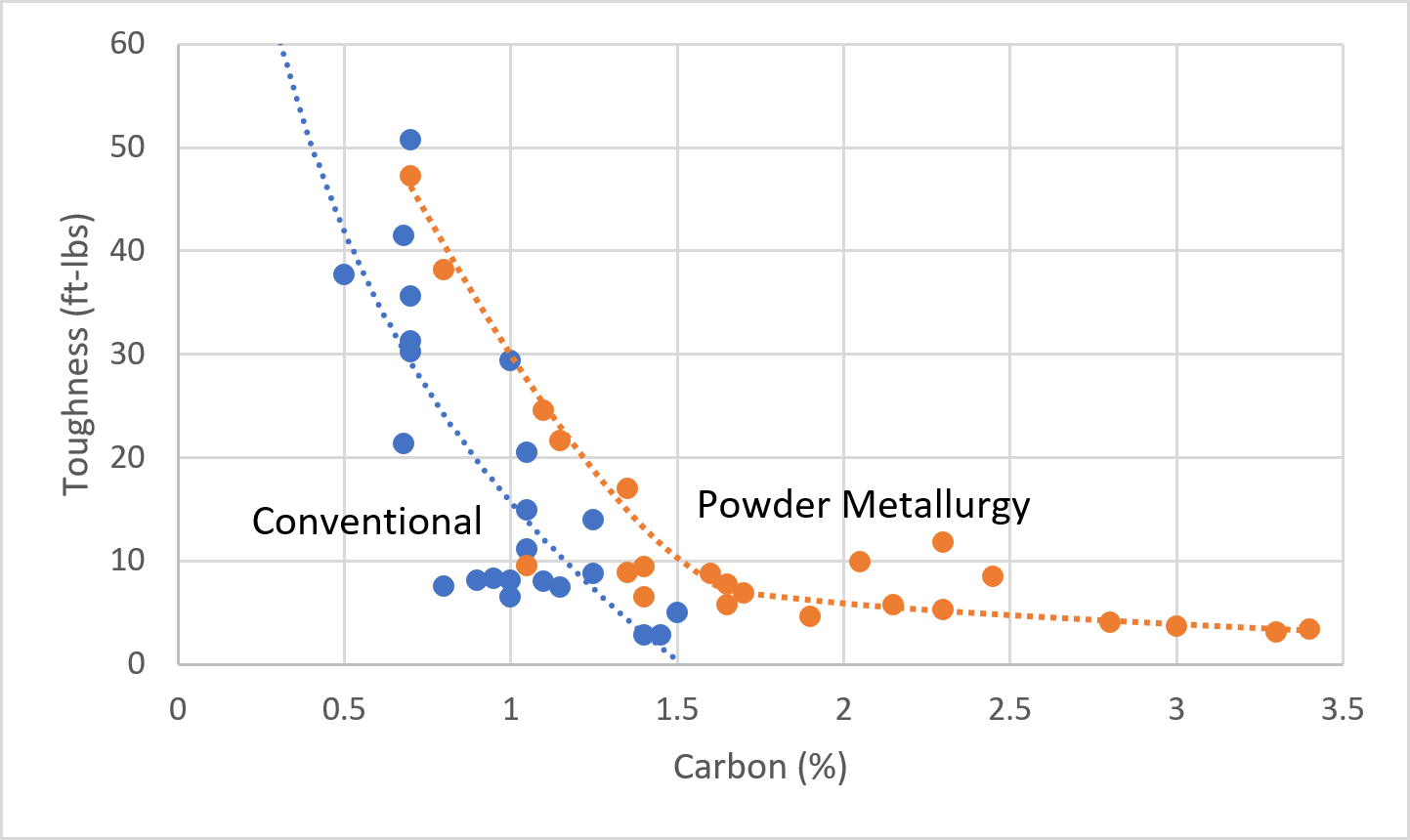
The limitations are much greater when not using powder metallurgy. The drop-off in toughness is a lot more rapid as wear resistance and carbon content is increased. There have been fewer generational improvements in the conventional steel space and I think there are opportunities there.
Summary and Conclusions
If you want to learn more about the past generational improvements and what led to different steels being used in knives, make sure you read my book The Story of Knife Steel: Innovators Behind Modern Damascus and Super Steels. Understanding the past gives us a better idea of what is possible in the future. As to what is possible in the future for knife steel, I laid out some possibilities above, and I can’t really be sure which will happen. I would like to make more Magna-family steels and to work on improving conventionally produced steels, but some may be too niche to be commercially viable. But the thing I can be sure about is that more copies and minor modifications of prior steels will definitely come out.
[1] Machinery vol 42. 1935, p. 64.
