
Category: Heat Treating and Processing
3 thoughts on “Heat Treating and Processing”
Leave a Reply
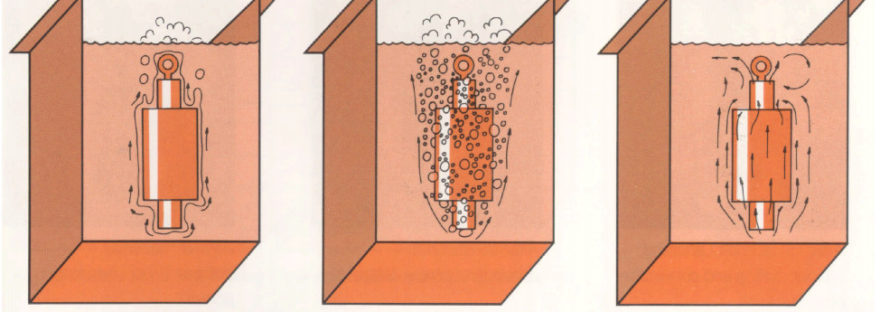
How Fast Do You Have to Quench? Hardenability of Steel
Thanks to Richard Patterson, Patrick Guignot, Aaron Lee, and David Richardson for becoming Knife Steel Nerds Patreon supporters!
Hardenability
How fast one must quench steel is controlled by its hardenability. Hardenability is not a measure of how hard a steel can get. Instead it is a measure of how fast you have to quench to achieve max hardness for a given composition. Therefore a steel with 0.2% carbon can have high hardenability without being able to reach a particularly high hardness; the steel can be allowed to cool in air and achieve more or less the same hardness as when it is quenched in water. On the other hand, a steel with very high carbon content that can reach very high hardness can have low hardenability, requiring a water quench to achieve its potential hardness.
Cryogenic Processing of Steel Part 3 – Wear Resistance and Edge Retention
Thanks to Ian Rogers for becoming a Knife Steel Nerds Patreon supporter!
Intro to Cryo and Wear Resistance
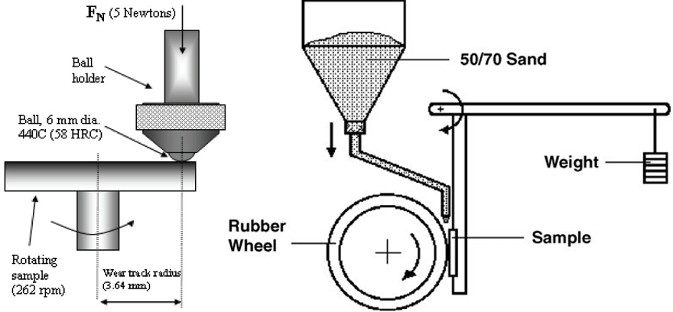
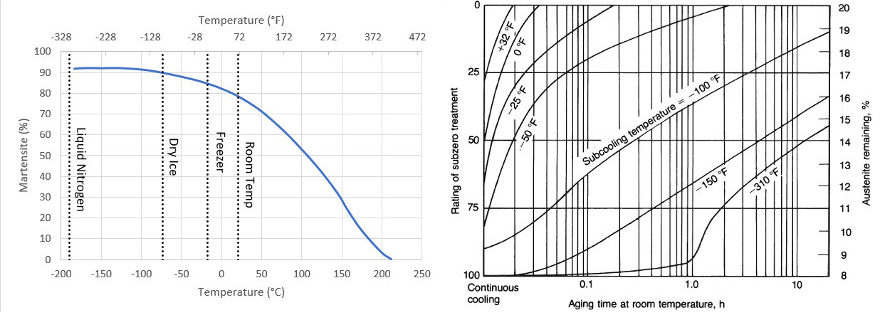
In Cryogenic Processing Part 1 I covered the effects of cryo on retained austenite and hardness. In Cryogenic Processing Part 2 I looked at the studies on cryo and toughness. Wear resistance is the most controversial aspect of cryogenic processing of steel. In particular there are claims that the use of cryogenic processing (liquid nitrogen) leads to an improvement in wear resistance that is not found with subzero processing (dry ice). Sometimes it is claimed that cryo can lead to massive increases in wear resistance [1]:
Cryogenic Processing of Steel Part 2 – Toughness and Strength
Thanks to Gator, Russell Dodd, and Matt de Clercq for becoming Knife Steel Nerds Patreon supporters!
Introduction
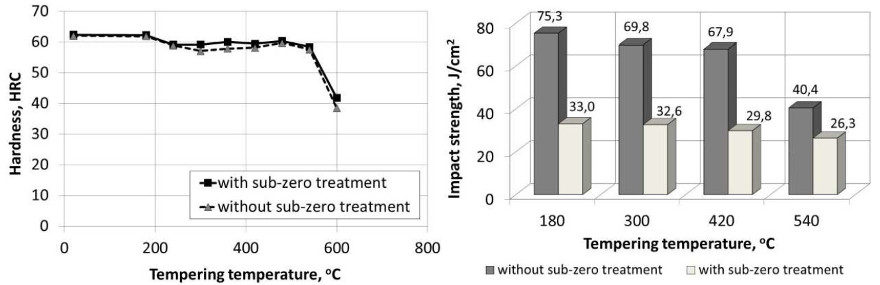
Part 1 of the Cryogenic Processing series covered the transformation of retained austenite to martensite and the increase in hardness that occurs. That is the least controversial aspect of cryogenic processing of steel. The other two primary properties of steel affected by cryo processing are toughness and wear resistance. Both of these properties can be difficult to pin down as they have high variability. Tool steels are known for their relatively poor toughness which means we are often comparing small numbers.
Detour – Tempering
One important interrelation to keep in mind with subzero and cryo studies is the transformation of retained austenite in tempering. With sufficiently high tempering temperatures all/most of the retained austenite is transformed without any cold treatment. This depends on the alloy content, as low-alloy 52100 will have lost its retained austenite with a 500-600°F temper while high alloy steels need over 900°F. You can read more in the article on tempering. With high alloy steels the loss of retained austenite also coincides with “secondary hardening” which is a high temperature tempering treatment that increases hardness [1]:
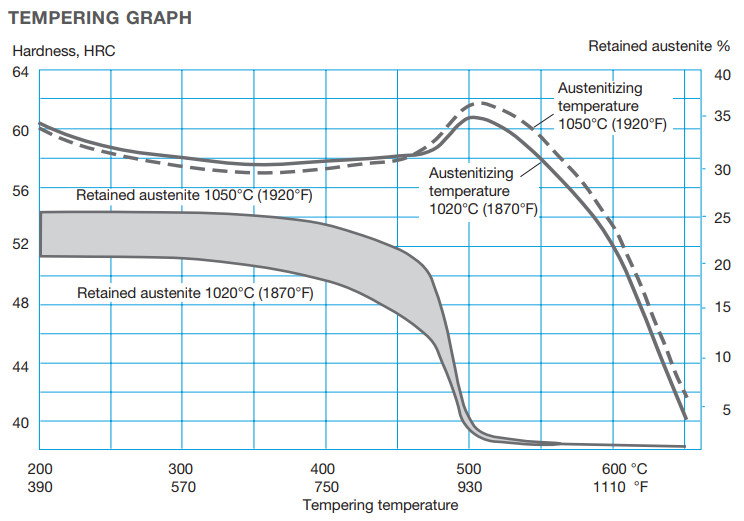
Above is a tempering chart for Caldie steel (0.7C-5.0Cr-2.3Mo) which shows both hardness vs hardening temperature and also retained austenite. You can see that at low tempering temperatures (<400°C) the retained austenite is basically constant. You can also see that the hardness decreases with higher tempering temperatures up to about 350°C and then it increases to a peak at around 520°C (950°F). Therefore tempering in the secondary hardening region above 400°C can lead to both high hardness and also the elimination of retained austenite.
Subzero or cryo processing prior to tempering also shifts the tempering-hardness curve to lower temperatures when using the secondary hardening range of tempering [2]:
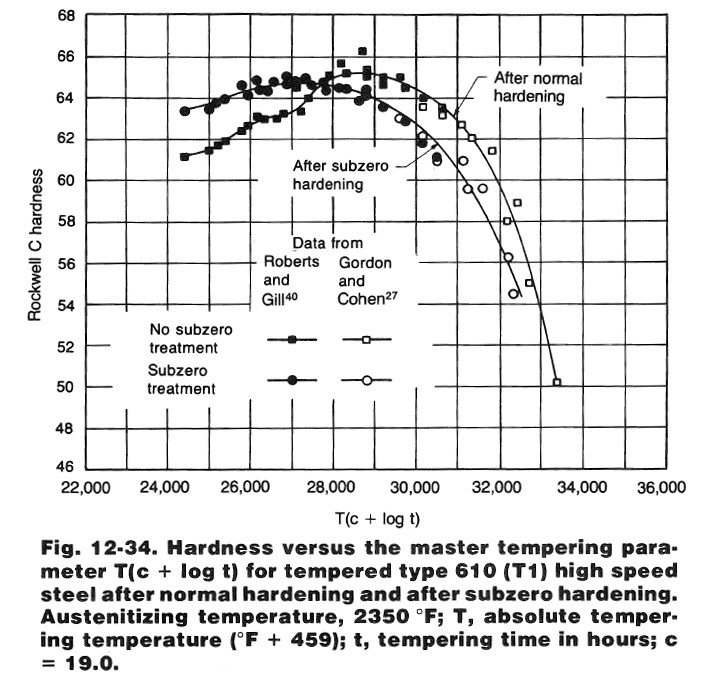
This means that in general, a lower tempering temperature is required to achieve the same hardness level with secondary hardening. Using the same tempering temperature as without a subzero treatment will lead to a greater degree of tempering. More tempering can be good or bad depending on the situation. Excessive tempering can lead to coarsening of tempering carbides which can reduce toughness. However, if the tempering was insufficient without subzero, the use of subzero processing may increase toughness due to shifting the “optimal toughness” range.
Toughness
In an earlier article where we tested the effects of heat treatment on Z-Wear toughness
Cryogenic Processing of Steel Part 1 – Maximizing Hardness
Thanks to Hiroaki Misono and Robert Venable for becoming Knife Steel Nerds Patreon supporters!
Heat Treating and Austenitizing
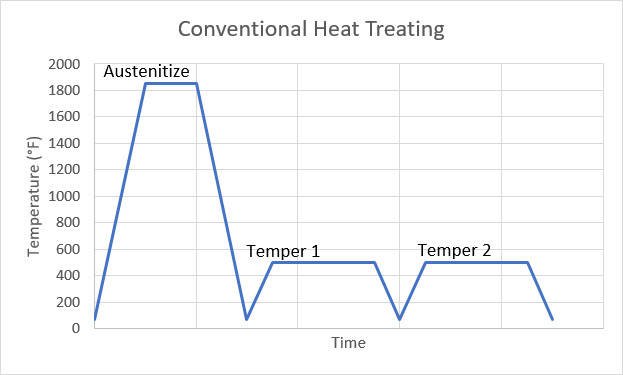
During heat treatment of steel, the steel is heated to a high temperature called the “austenitizing” temperature where a phase called austenite is formed. Steel has different phases which refer to different arrangements of iron atoms within the steel. Austenite has a different set of properties from the typical room temperature phase of steel. One example of the different properties of austenite is that it is non-magnetic unlike the room temperature ferrite or martensite.
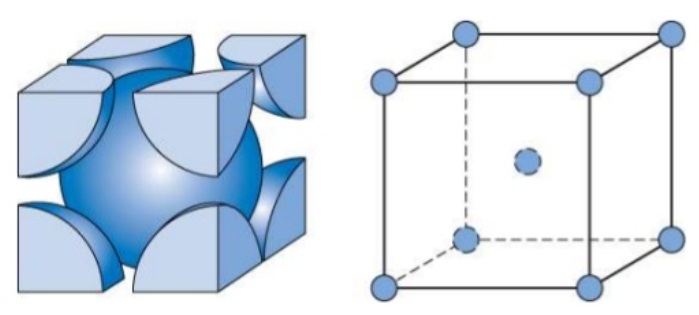
Room temperature iron/steel – Ferrite – Body Centered Cubic Atom Arrangement
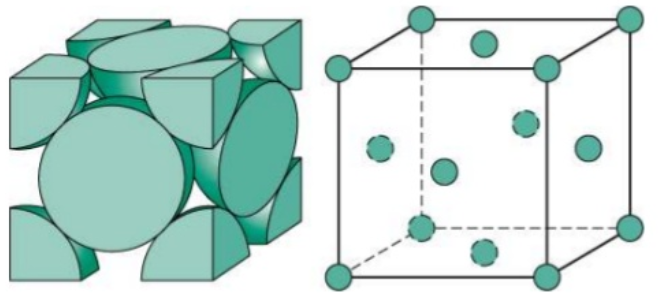
High temperature iron/steel – Austenite – Face Centered Cubic Atom Arrangement
After holding the steel at the high austenitizing temperature, the steel is then rapidly quenched which transforms the steel to a phase called martensite which has high hardness. It gains its high hardness because carbon is trapped in between the atoms which makes the room temperature phase martensite as opposed to the soft ferrite.
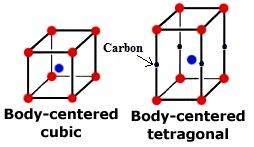
Normal soft room temperature ferrite on the left and hard martensite on the right
All About D2 Steel – Development, Use in Knives, and Properties
Thanks to Robert Erickson, knifeandgear_swiss, Dale Bushness, and Paul Hart for becoming Knife Steel Nerds Patreon supporters!
Update 10/22/2020: I now have an article with how to heat treat D2, PSF27, and CPM-D2 and it also includes toughness testing of each steel and edge retention testing of D2. https://knifesteelnerds.com/2020/08/31/how-to-heat-treat-d2-psf27-and-cpm-d2/
=&0=&
D2 is a common tool steel and knife steel. It is also known by other names such as the Japanese designation SKD11, German designation 1.2379, Hitachi SLD, Uddeholm Sverker 21, and many others. How long has it been around? Where did it come from? Who started using it in knives? How do its properties compare to other steels? Find your answers here!
Early Chromium Steels
The development of D2 steel coincides in part with the invention of stainless steel as well as high speed steel. You can read
an article about the history of stainless steel here
Silicon Additions for Improving Steel Toughness
Thanks to Colin Shannon and Robert Williams for becoming Knife Steel Nerds Patreon supporters!
High Toughness Steels
There are a series of shock resisting steel designed for high toughness (see this article to learn about toughness). A popular one is S7, an air hardening steel that can reach relatively high hardness. Another steel in the “S” series, S5, is reported to be even tougher [1][2][3][4]:
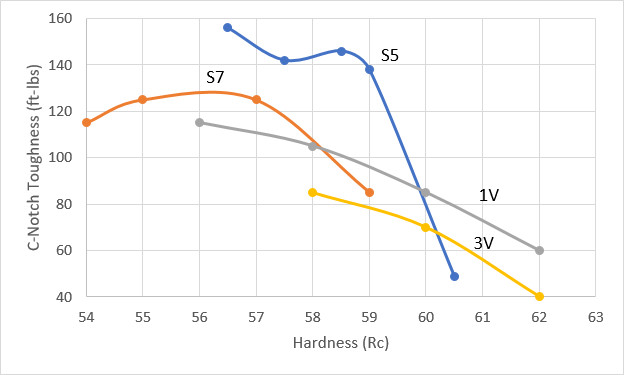

1V and 3V are powder metallurgy steels designed for high toughness but more wear resistance than the “S” series steels. One thing you notice about these high toughness steels is that they have lower carbon than many other steels used in knives. The lower carbon is beneficial for toughness in several areas:
- Less likely to form “plate martensite” which is detrimental to toughness (see this article to learn about plate martensite)
- Forms a lower volume of “primary” carbides which are detrimental to toughness (see this article to learn about primary carbides and toughness)
- Form fewer “tempering” carbides which are also detrimental to toughness (see this article to learn about tempering)
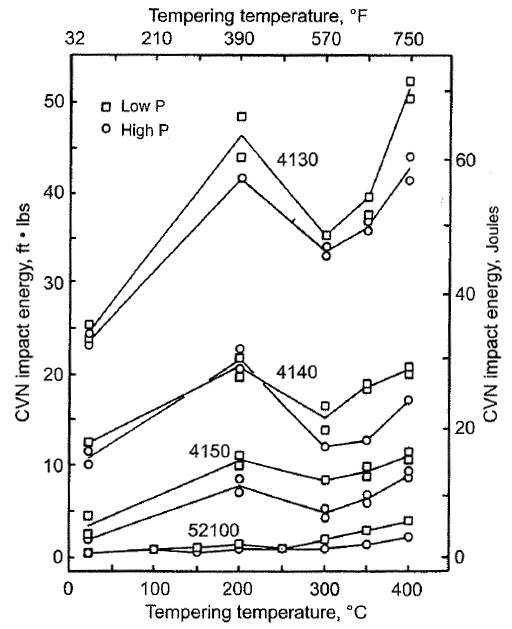
The strong effect of carbon on toughness can be seen in the following chart [5][6][7]:
Tempered Martensite Embrittlement (TME)
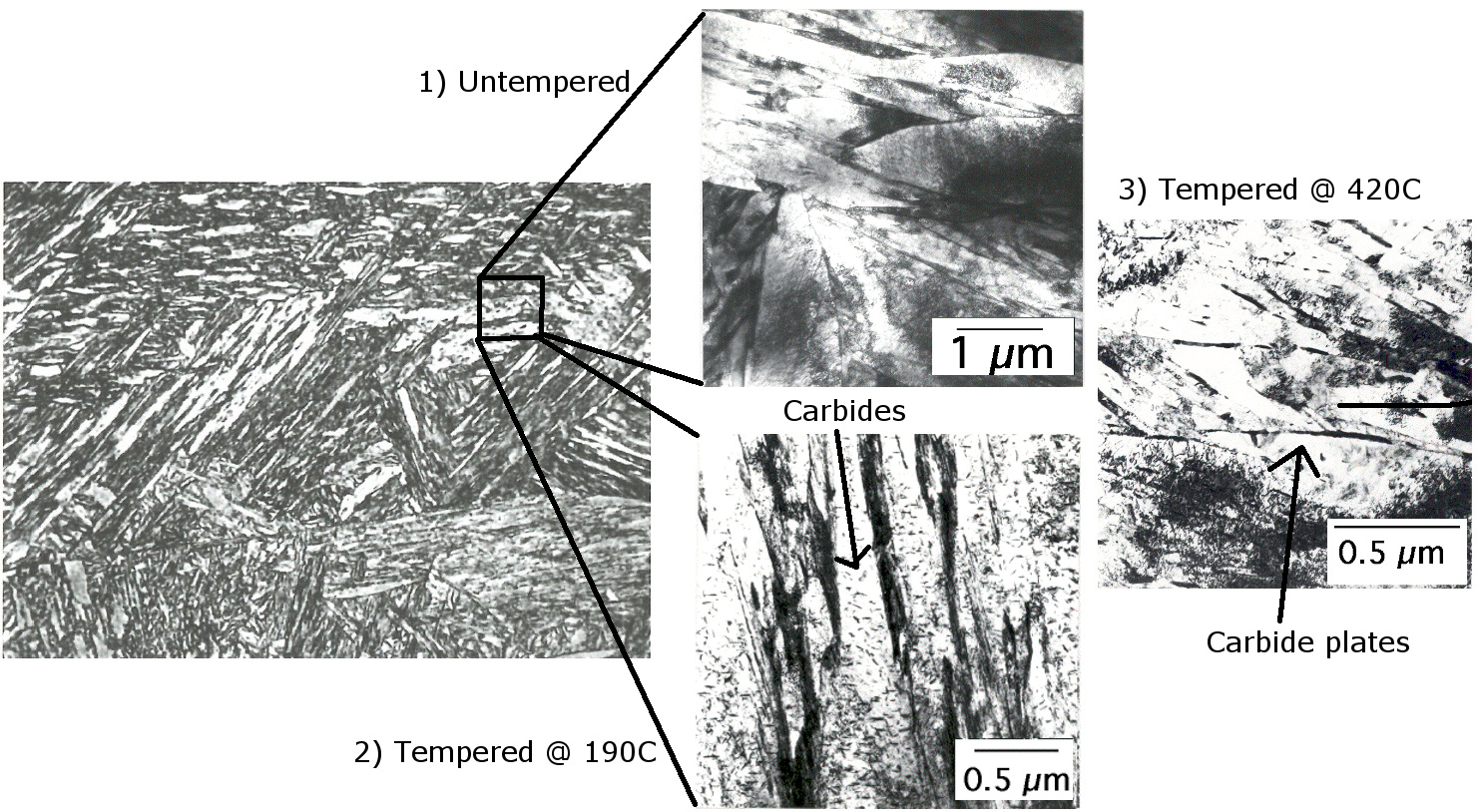
52100 with its 1.0% carbon is much lower in toughness than the other steels in the chart, and toughness increases as the carbon decreases. While part of this change is due to hardness (lower hardness usually means better toughness), that is not the only reason. For one thing, the hardness of each steel can be decreased with a higher tempering temperature. The difference in hardness between 4150 and 4140 with a 200°C temper is only about 1-2 Rc [8], while the toughness is approximately double for 4140. Another thing you might notice in the chart above is that each steel reaches a peak toughness at about 200°C and then drops in toughness at 300°C. When tempering up to about 200°C there are very fine transition and cementite carbides that are formed which are largely not detrimental to toughness. However, when tempering in the range of 250-400°C or so those small carbides are replaced by larger “plates” of cementite. This effect is called “tempered martensite embrittlement” or TME. Another thing you might notice is that the toughness of 52100 is so low it is difficult to see the TME. With other toughness tests designed for brittle materials, however, the TME is still present in 52100 [9].
Carbide Growth
The large carbide plates are formed by two primary mechanisms. The first is simply the growth of carbides that occurs with more time and temperature. Just like how grain growth occurs with sufficient time and temperature, the same thing happens to carbides. Smaller carbides dissolve and the larger carbides grow with diffusion of carbon. The carbides end up in a “plate” shape because they form along grain boundaries where carbides nucleate easily and the boundaries also act as paths for carbon diffusion. The process whereby small carbides are replaced by large carbides can be visualized with the video of this growth mechanism, called “Ostwald Ripening”:
Retained Austenite and its Decomposition
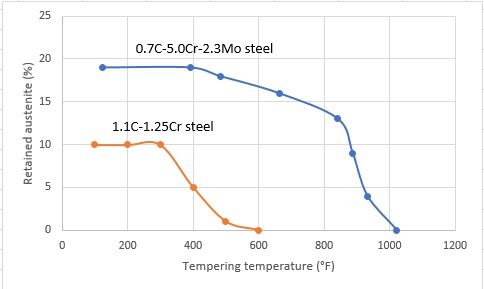
Another way that the large carbide plates form is through the decomposition of austenite. After quenching steel from high temperature to form martensite there is usually some amount of “retained” austenite which is the phase that the steel transforms to at the high temperature prior to quenching. You can read more in this article on austenitizing and this article on martensite. With sufficient tempering the austenite decomposes to the low temperature phase ferrite along with carbides. Certain alloying additions to steel can delay the decomposition of retained austenite, which you can see by comparing the 5.0Cr-2.3Mo steel to a 1.25%Cr steel [9][10]:
Effect of Silicon
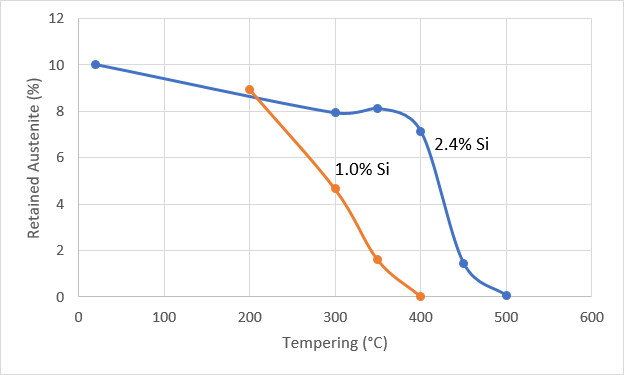
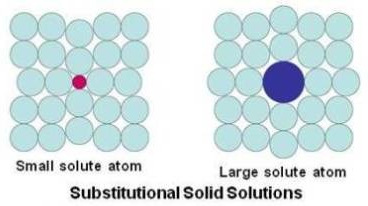
With low alloy steel, however, the austenite has almost entirely decomposed by 500-600°F (260-316°C). It is not always feasible to add a large amount of Cr and Mo to steel to delay the decomposition of austenite. But there is one alloying element that is very effective at both delaying the replacement of transition carbides with cementite and also at delaying the decomposition of austenite. That alloying element is silicon. Silicon has little or no solubility in cementite so it must diffuse away for cementite to form. Silicon diffuses much slower than carbon because it is a much larger atom, so the formation of cementite is delayed to higher temperatures. This effect can be seen with a comparison in retained austenite with different tempering temperatures, where the higher silicon steel retaines austenite at higher temperatures [11]:


Fast interstitial diffusion like carbon on the left and slow substitutional diffusion like silicon on the right
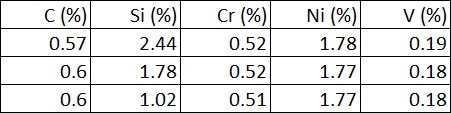
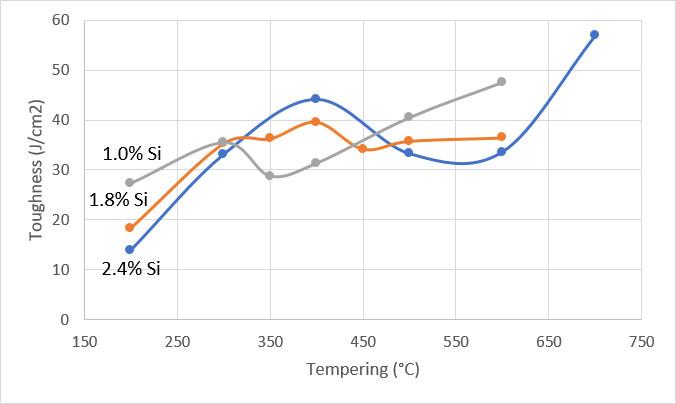
Therefore the main benefit to adding silicon is to delay TME and therefore be able to use higher tempering temperatures to both reduce hardness and also increase toughness. However, in some cases higher silicon can actually reduce toughness with low tempering temperatures [11]:
It is not as simple as comparing toughness vs tempering temperature because silicon also increases hardness of steel, as shown in the hardness vs tempering chart:
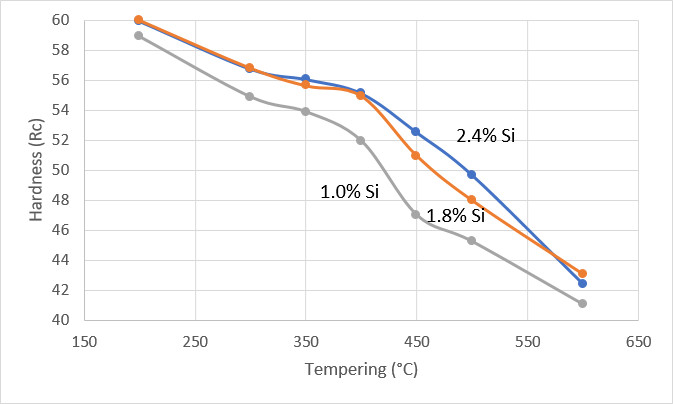
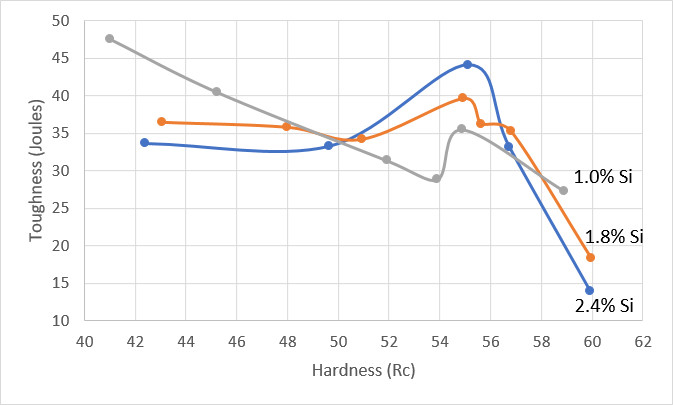
Then when plotting toughness vs hardness with each of the steels, the toughness difference is a little more clear. With the lowest tempering temperature and highest hardness the lower silicon steel has higher toughness, but when tempered down to 55 Rc the high silicon steel is clearly superior:
Silicon Strengthening
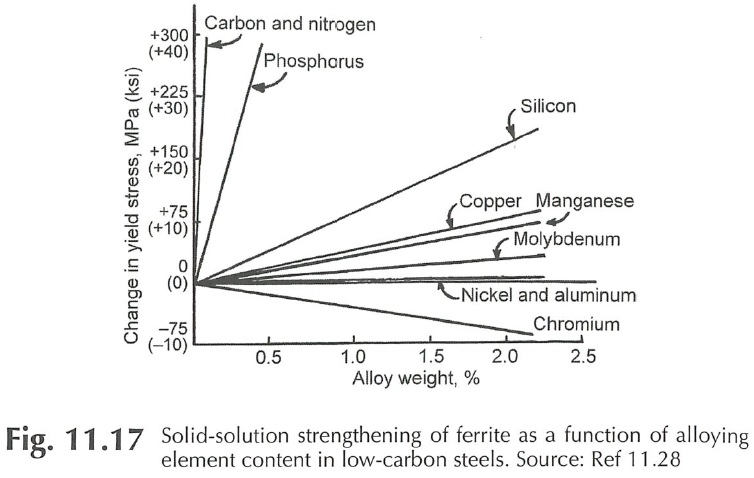
The silicon addition delays tempering by suppressing carbide formation so higher hardness is maintained at higher tempering temperatures. Silicon also increases hardness through “solid solution strengthening” which means that silicon increases the inherent hardness of the steel by replacing iron atoms with silicon atoms. The silicon atoms are a different size than iron atoms and therefore “strains” the atomic lattice which increases the strength of steel. Silicon is one of the best elements for solid solution strengthening [12]:
Cryogenic Processing
Using cryogenic treatments after quenching to eliminate retained austenite prior to quenching would eliminate retained austenite and therefore the decomposition to cementite would not occur. However, in a study on 4340 steel with cryo or without, tempered martensite embrittlement was still observed [13]:
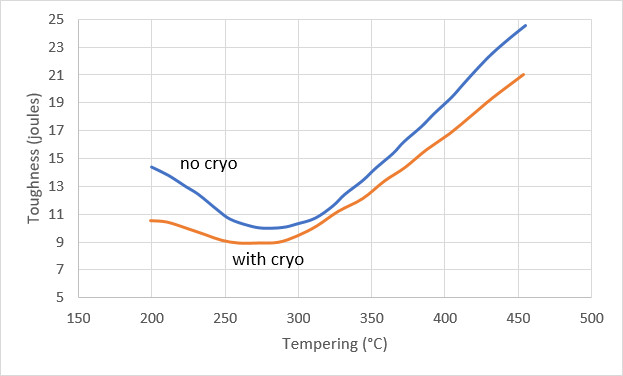
This indicates that it is not only the decomposition of austenite that leads to tempered martensite embrittlement, but TME is exaggerated because retained austenite enhances toughness and therefore the loss of it contributes to TME. The primary mechanism of TME is the replacement of transition carbides with larger cementite plates from tempering at higher temperatures.
Adding Silicon to 52100
So a silicon addition improves toughness in certain cases, such as with S5 with its 0.6% carbon. What about high carbon steels with inherently poorer toughness like 52100? Fortunately, a group of researchers already did the study for us [14], with the following compositions:

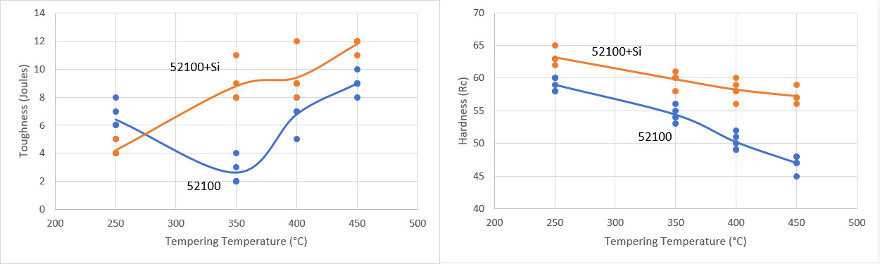
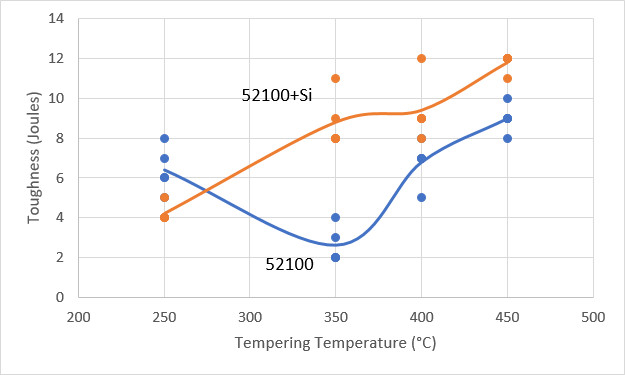
Comparing the toughness of 52100+Si to the base 52100 shows that the Si added steel actually has lower toughness with the lowest tested tempering temperature (250°C), but then has greater toughness with tempering temperatures of 350°C and above, which is due to Si delaying tempered martensite embrittlement:
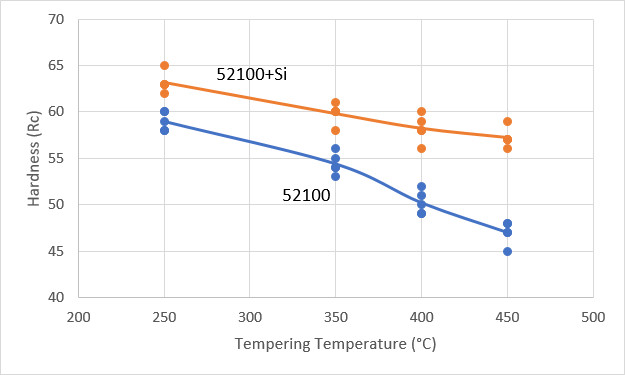
However, when the hardness is compared between the two steels it is clear that the silicon addition increased the hardness of the modified 52100, both because of “solid solution strengthening” and delaying tempering:
Therefore when comparing toughness vs hardness rather than tempering shows a bit different trend of toughness between the Si-added and Si-free 52100:
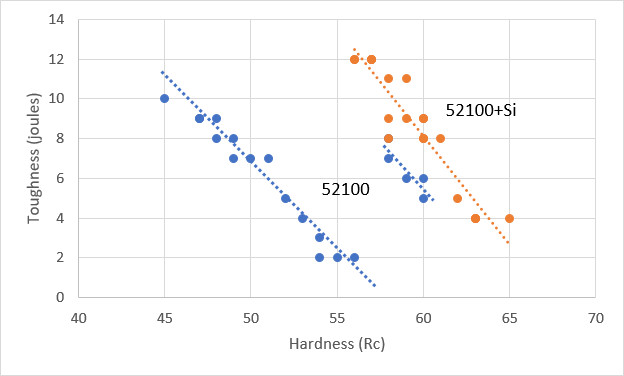
It can be seen that with high hardness 52100 (~57+ Rc) shows that the Si addition led to an increase in toughness. At 60 Rc the 52100 had about 5.5 joules and the 52100+Si had about 8 joules, a 45% increase in toughness. There is a big difference in toughness with the 52100 tempered at 350°C and above; it almost looks like two different steels. 52100 at 56 Rc got about 2 joules while 52100+Si was tested at about 12 joules, a massive difference.
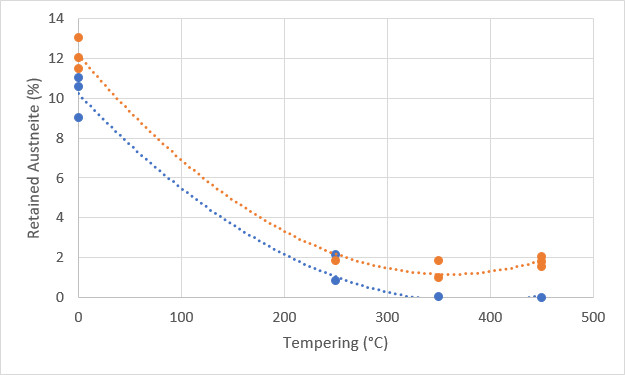
A difference was measured in retained austenite between the two, but it’s still a pretty small fraction of retained austenite, no matter which steel you are looking at. Therefore, the effect from the difference in retained austenite is likely small:
Silicon also increases the temperature at which steel needs to be austenitized. In this study they heat treated both 52100 steels at 865°C (1589°F). The result is that there was more cementite in the 52100+Si, 10% vs 6% for the conventional 52100. The higher volume fraction of cementite in the 52100+Si likely means that it had greater wear resistance than the conventional 52100 with the heat treatments they used. Therefore, the 52100+Si had both greater wear resistance and toughness-hardness balance.
Graphitisation
One potential effect that can occur with high silicon steel is the formation of graphite in the steel, known as graphitisation. Silicon increases the rate at which graphitisation occurs. O6 steel is a graphite-containing steel and is alloyed with 1% Si and high carbon (1.5%) which gives it rapid graphitisation. The steel is then treated to form graphite. Graphite makes machining easier and helps prevent galling, but is not particularly desirable in a knife steel. Some other alloy elements, notably chromium, help to delay graphitisation. Perhaps that makes that makes 52100 with its 1.5% Cr a good candidate for a high silicon addition as described above.
High Alloy Steels
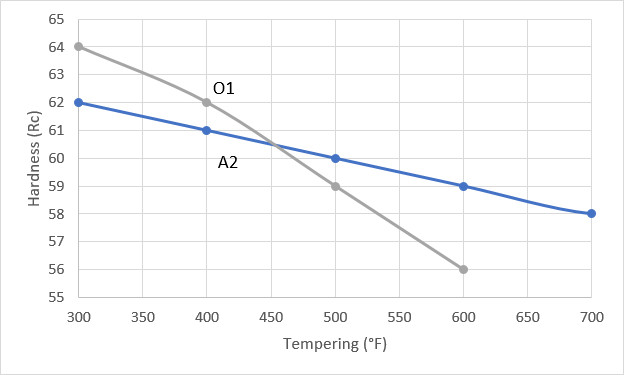
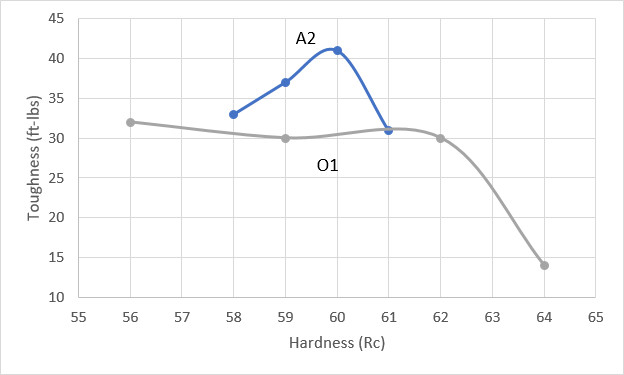
As shown in the earlier comparison between 5.0Cr-2.3Mo and 1.25Cr steels, other alloy additions can have a similar effect to silicon if added in sufficient amounts. While silicon is insoluble in cementite and therefore has to diffuse away for cementite to form; Mn, Cr, and Mo behave in the opposite fashion. Those alloy additions are highly soluble in cementite and therefore have to diffuse into the forming cementite. However, Cr and Mo must be added in a much higher amount to delay TME, so the effect is seen in many air hardening steels. Comparing O1 (a low alloy, low silicon steel) to A2 (a low silicon, 5% Cr-1%Mo steel) shows a somewhat similar effect as silicon [15][16]:
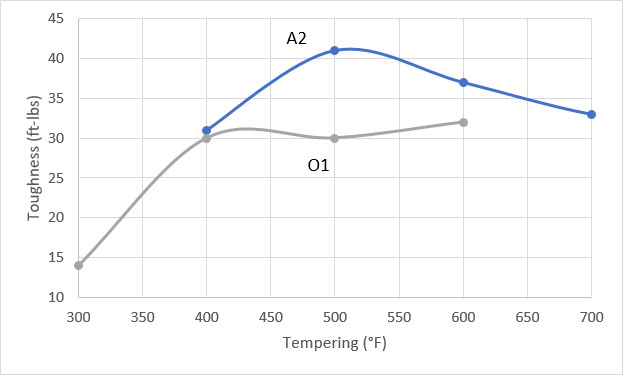
You can see that the O1 has TME after tempering around 500°F, but the A2 continued to increase in toughness, and TME is delayed to higher tempering temperatures. The hardness is slightly different between the steels at different hardening temperatures, but the end result is that A2 has higher toughness, particularly at 60 Rc.
Austempering (Bainite Formation) of High Silicon Steels
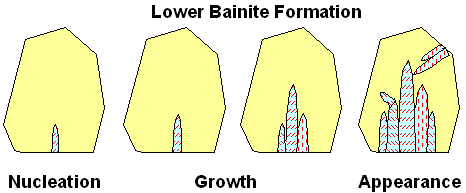
The effect of silicon on austenite retention and suppression of cementite formation is also significant when austempering to form bainite rather than martensite. You can read more about this microstructure in my article on bainite vs martensite. With typical steels lower bainite looks a lot like tempered martensite, a lath-like microstructure with tiny carbides throughout. However, with a large silicon addition the carbides are unable to form and instead the carbon diffuses into the remaining austenite as bainite forms resulting in a relatively large fraction of austenite [17][18]. Large fractions of retained austenite are generally undesirable in knife steels because of the reduction in yield strength and concerns about toughness reduction after retained austenite transforms to fresh martensite. High silicon knife steels are relatively rare and so is austempering of knife steels, so austempering of high silicon steels is not something I have seen in knives.
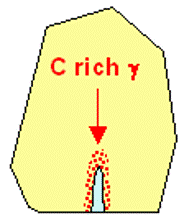
In high-Si steel, as the bainite “lath” grows, carbon diffuses out of the lath into the austenite stabilizing the austenite
What is Powder Metallurgy?
Thanks to Greg Jessen for becoming a Knife Steel Nerds Patreon supporter! There is currently a poll on Patreon for voting members on what equipment I will purchase for future research.
Conventional Casting
Conventional casting of steel involves the alloying of steel in the molten, liquid form followed by pouring into ingot molds where the steel slowly cools to form the solid steel. The steel is then forged and/or rolled to final dimensions. Because of slow cooling rates to form the final ingot there is significant segregation of alloying elements and steel phases that makes the forging and rolling operations necessary to have consistent properties. This is especially true of highly alloyed steels because there is more alloy to segregate.
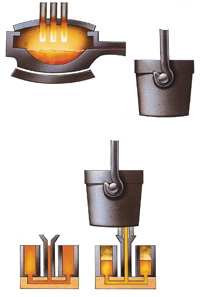
This image comes from [1]
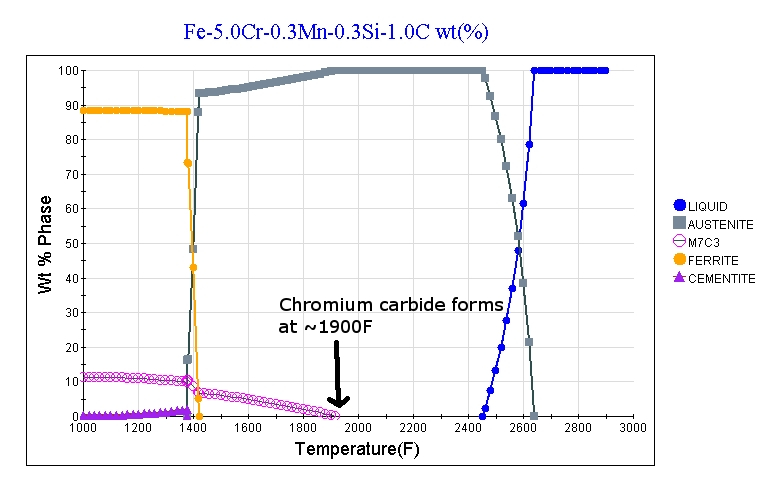
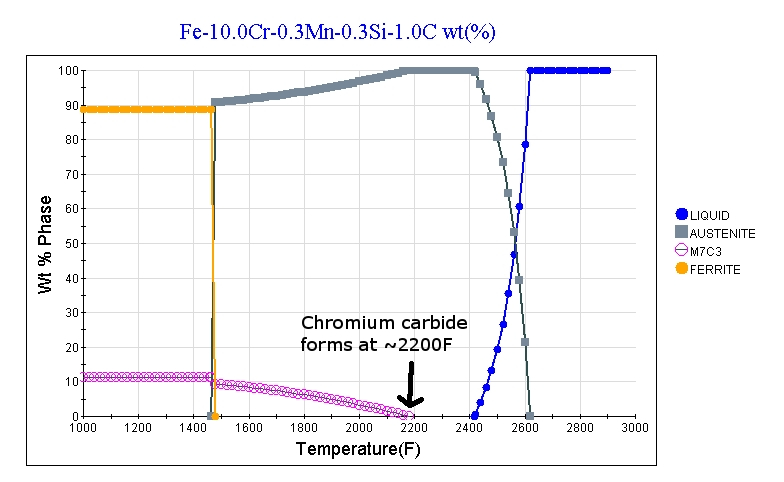
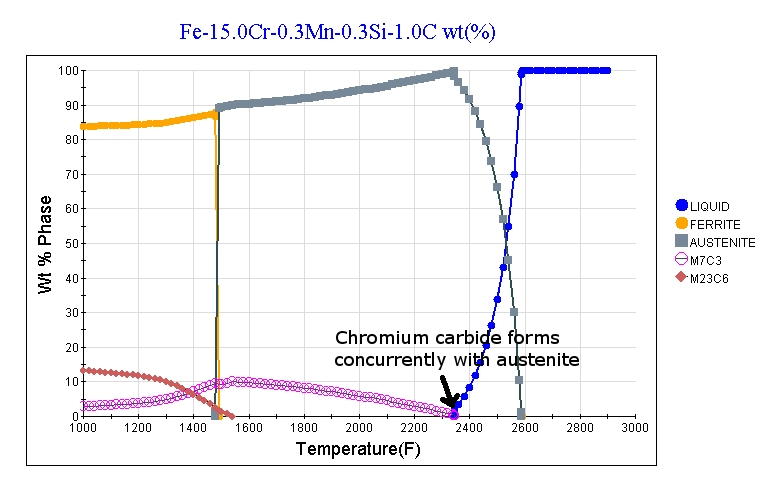
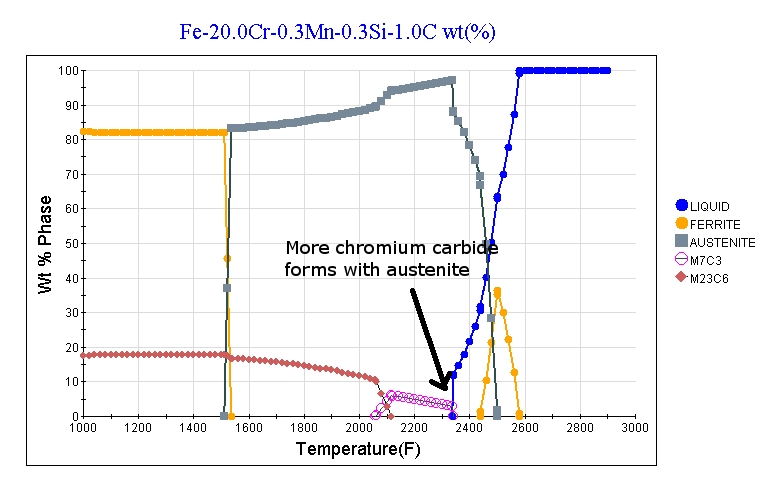
Powder metallurgy is a technology that was invented to allow the production of very high alloy tool steels. The issue with high alloy tool steels is that they form very large carbides that leads to poor toughness (see this article on chipping to learn about carbides and toughness). Sometimes to the extent that they cannot even be manufactured without problems in production. The issue is that with large amounts of alloys that the carbides form at higher and higher temperatures. Here are examples of a 1% carbon steel with increasing levels of chromium (5, 10, 15, and 20%), with simulations in JMatPro showing the temperature at which the chromium carbide forms:
High Temperature Carbide Formation
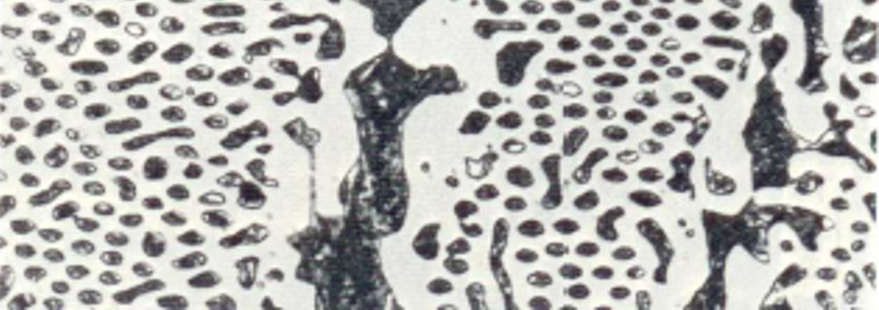
The chromium carbides are referred to as either “primary” or “secondary” carbides. Primary carbides are those that are formed during the slow cooling of the casting process from liquid. Secondary carbides are those that have dissolved and then re-formed, or precipitated, during thermal processing. Typically secondary carbides are smaller than primary carbides. Therefore we would like to eliminate primary carbides if possible. At 5% or 10% chromium the chromium carbide (M7C3) forms after the steel has completely solidified as the high temperature phase austenite (read about austenite here). The carbides also form at temperatures close to or below typical forging temperatures (~2100°F) so with well-designed processing the carbides are dissolved and re-precipitated during forging so that they are reduced in size. However with the 15% or 20% chromium conditions shown above the chromium carbides are first forming in the liquid. The chromium carbides form concurrently with austenite and form a structure sometimes called “ledeburite.” Because the transformation of austenite and carbide is concurrent the temperature that the carbides form doesn’t continue to increase with further chromium addition but the amount of carbide increases with higher levels of chromium. Therefore the 20% chromium condition sees carbide formation at a similar temperature to 15% chromium but the amount of ledeburite is greater. Ledeburite contains both austenite and carbide in an interesting structure [2]:
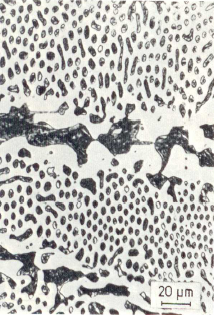
With the ledeburite structure the carbides form in the liquid where they are even larger than when formed in the solid and are difficult to break up in forging. Furthermore, because they are stable in a partially melted steel it is impossible to dissolve them by high temperature processing and/or forging. Larger carbides are more stable than small carbides so extended time at high temperature is more likely to lead to an increase in carbide size rather than the reverse. Forging does help to reduce the amount of segregation in the cast steel and to reduce the carbide size, however [3]:
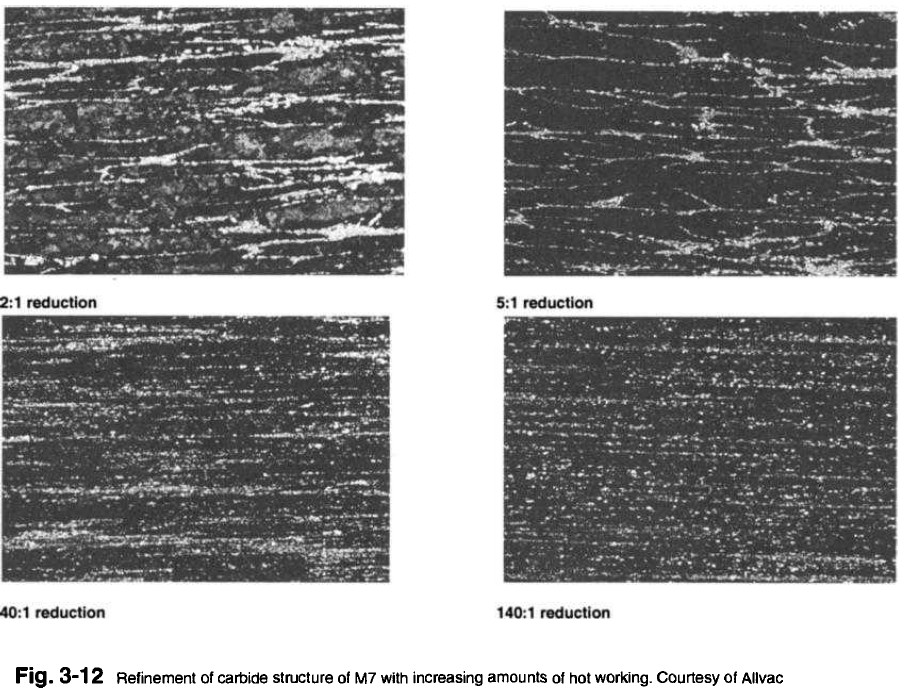
Despite the improvement in structure, however, the primary carbides can only be reduced in size so much for the reasons described above, and steels like 440C, D2, and 154CM with conventional casting and processing still have carbides that are greater than 10 microns, and those large carbides lead to reduced toughness. Here is an example of D2 where the large grey particles are the primary chromium carbides, compared with 13C26 below it with much finer secondary carbides:
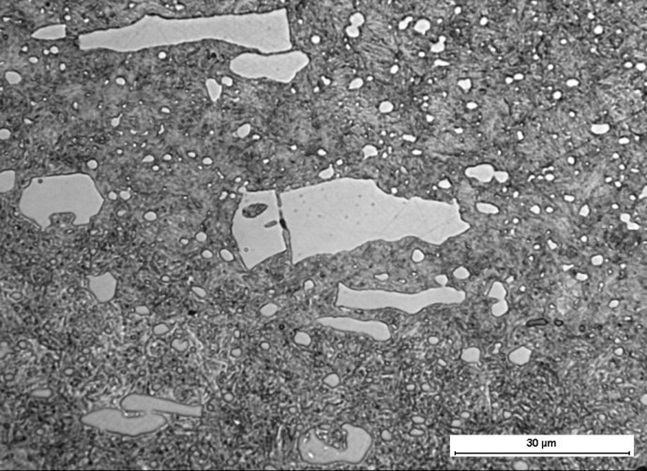
D2 steel with large primary carbides
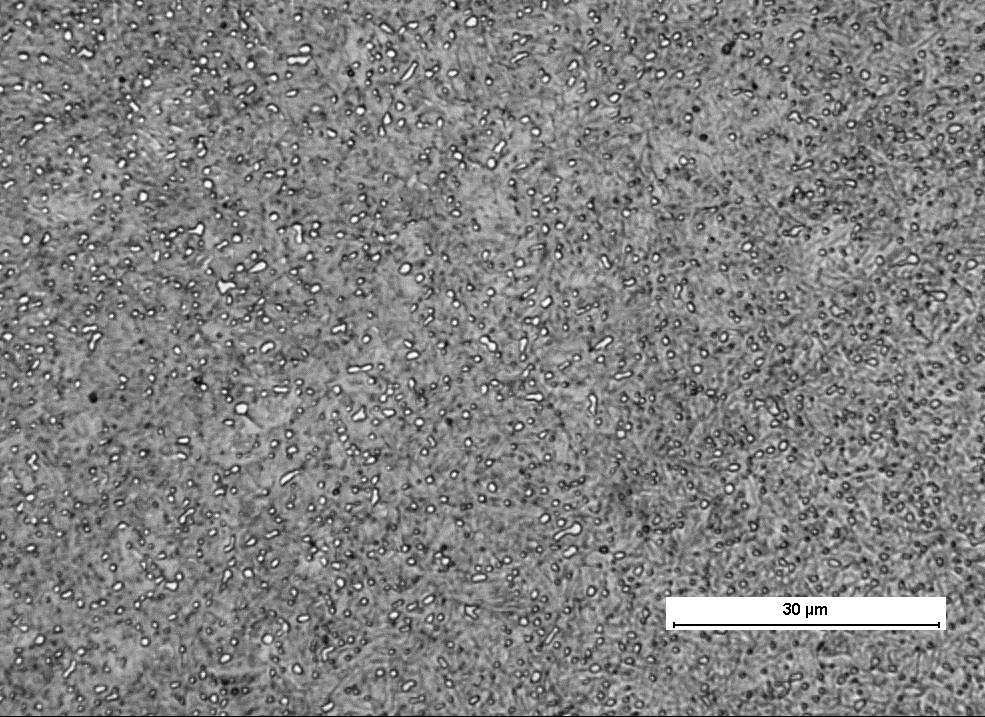
13C26 with fine secondary carbides
Vanadium Carbides
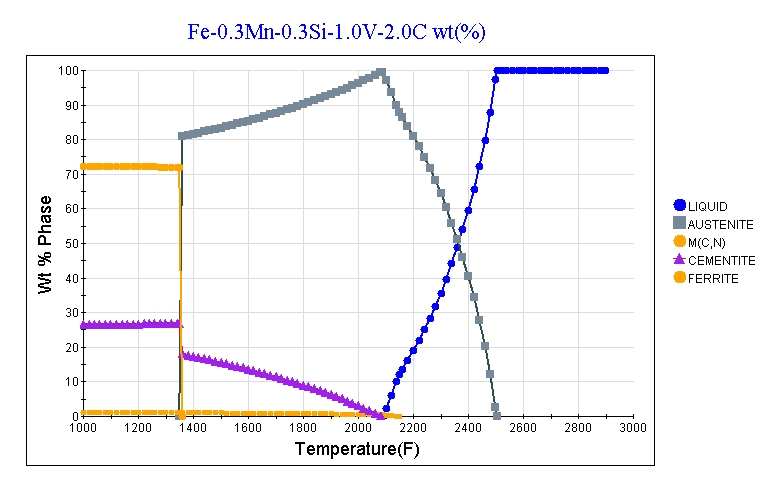
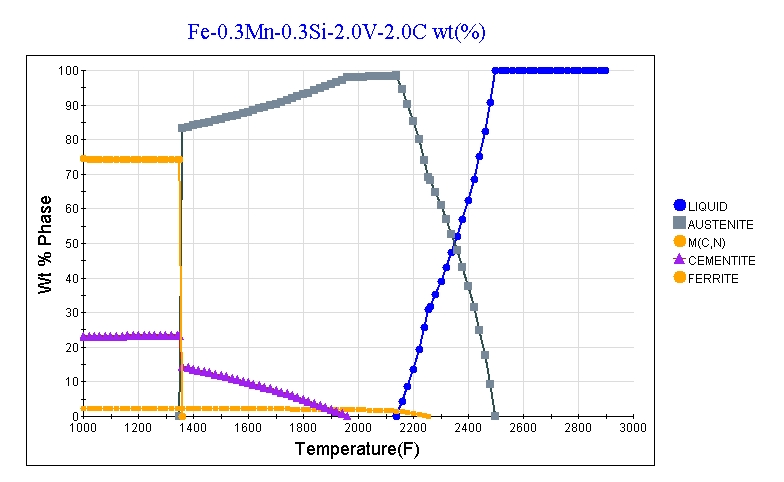
Other carbide types can cause even bigger problems, as instead of the ledeburitic structure (carbide+austenite) they form independently in the melt. One good example is vanadium where the vanadium carbides form at higher and higher temperatures in the liquid steel with further increases in vanadium. The high temperature and rapid diffusion in liquid steel means that the carbides can grow to very large sizes. Their stability in the liquid also leads to the same problems described above where the carbides cannot be eliminated through thermal processing or forging. Here are JMatPro calculations of 1%, 2%, and 10% vanadium showing the high temperatures at which the carbides form, see the yellow dots labeled M(C,N) for 1%, 2%, and 10% vanadium:
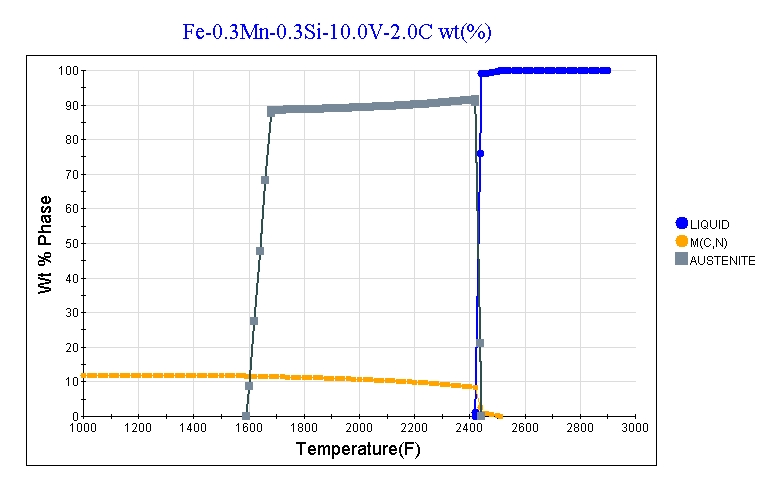
It had previously been discovered that with higher carbon contents that vanadium could be increased to high levels for better wear resistance (see this article on development of high vanadium steels). However, there there was somewhat of a limit of viable vanadium additions in steel of approximately 4% vanadium where the steels would be too brittle to be practical and the carbides would simply be too large.
Processing Effects
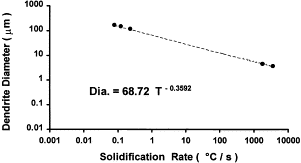
One method known to help with this problem of large carbides is to cool the steel more quickly as it solidifies. One simple way to do this is to use a smaller ingot size. It makes intuitive sense that very large multi-ton ingots cool very slowly with their large size, while a very small ingot cools more rapidly. With a rapid solidification rate the size of the “dendrites” is smaller which is the tree-like structure that forms during solidification. A smaller dendrite size indicates that less segregation has occurred and the final carbide size is likely to be smaller [4]:
Powder Metallurgy
Powder metallurgy is a method by which very tiny ingots are formed. The liquid steel is dripped through a nozzle and is “atomized” by liquid or gas sprays that near-instantly solidify the steel as powder. Typically nitrogen is used in the production of tool steel. Each particle of the powder is like its own tiny ingot. Therefore the cooling rates are much faster than conventional casting. You can see an animation of the process and then a video of it actually happening:
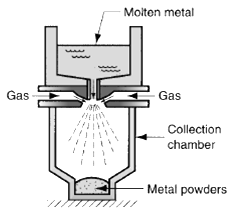
This image is from [5]
After the powder is produced then it is sealed up in a mild steel can and undergoes “hot isostatic pressing” (HIP) by heating it up to high temperature (approximately forging temperature) and pressurizing it to turn the individual powders into a solid ingot. The HIP process is similar to forge welding for damascus. The ingot is then forged and/or rolled in the same way that any ingot would be processed.
You can see a Bohler-Uddeholm video summarizing the entire process below where hopefully all of the background information described above makes it easier to understand what they are describing:
When all that process is complete you end up with a steel that has a much finer and more uniform carbide structure than in a conventionally cast steel, such as can be seen in a comparison with 154CM and CPM-154 below:
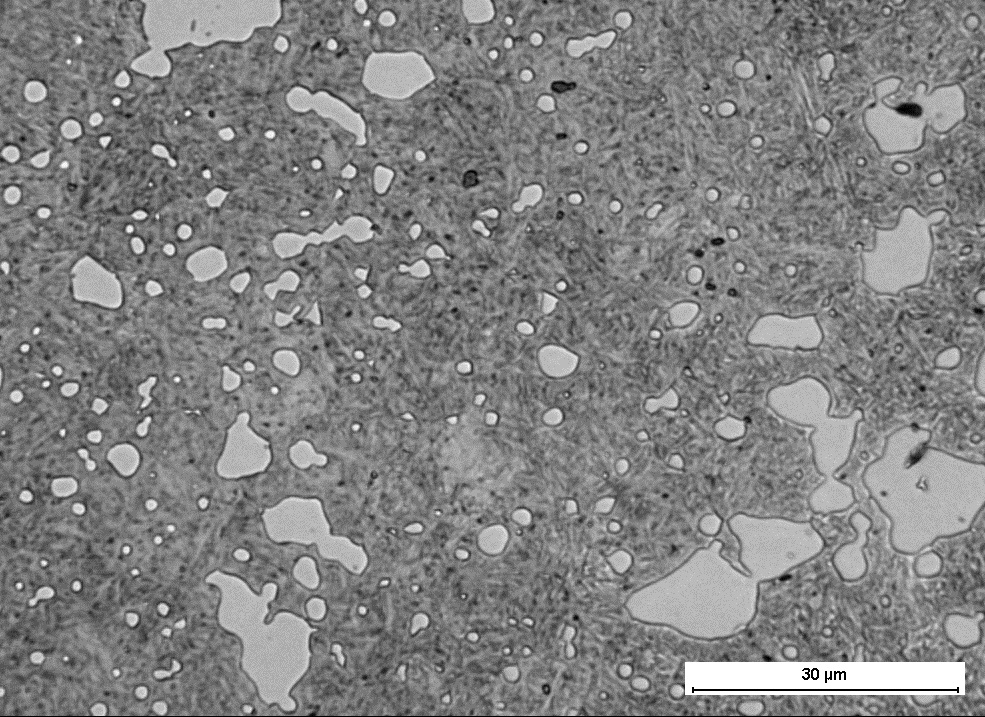
Conventionally Cast 154CM

Powder Metallurgy CPM-154
Bainite vs Martensite – The Secret to Ultimate Toughness?
Thanks to Thomas Busch for becoming a Knife Steel Nerds Patreon supporter!
Misc. update: I have added a set of supporting micrographs to the introduction to Austenitizing steel.
Tempered Martensite
To begin describing what bainite is it makes sense to start with martensite first. To form martensite we heat up the steel to high temperature to transform to a phase called austenite where we dissolve carbon in between the iron atoms (see Austenitizing Part 1), then quench the steel to lock in the carbon and form a hard phase called martensite (see
What Makes Quenched Steel so Hard?
Review – Kevin Cashen’s Guide to 1080 & 1084
Thanks to Edward Braun, Mark Reich, and Alex Kaplan for becoming Knife Steel Nerds Patreon supporters!
Misc. updates: I added some toughness numbers that I had previously been unable to track down comparing 440C and 154CM to the 154CM article. I also added a summary of a very interesting new journal article about the effect of grain size on steel toughness to the Grain Refinement article.
Now on to the review…
Mastersmith Kevin Cashen recently released a DVD all about heat treating 1080/1084 (they are nearly identical steels, which is why they are grouped together). I think this was a great idea. Cashen is known for giving entertaining and informative lectures on metallurgy. 1084 is a very popular steel for beginning knifemakers and there are countless discussions on the various knife forums about how to heat treat it. Furthermore, Cashen focuses a great deal of the DVD on heat treating the steel with a forge, which is often the tool at the disposal of a beginner. This DVD fills an important niche and I think it will be popular based solely on the subject matter being covered.
The Introduction
Cashen begins the video providing a short introduction on what the DVD is made to teach, who he is, and what the DVD will not cover. I like that he stated that the DVD will not teach you how to make the “ultimate” knife, but how to make a “good” knife, and he says that knifemakers sometimes become distracted by the “ultimate” goal. I think he’s right; there are many knifemakers trying out various odd forging and heat treating practices in an attempt to make their blades better than the next person. Many of the ideas they try out won’t work. Experimentation is good; however, many times they are trying out failing ideas because the knifemaker doesn’t know what the individual heat treating process is for that they are tweaking. Should I normalize for a longer time? A shorter time? Higher temperature? Lower temperature? Should I normalize multiple times? There is no way to answer those questions without knowing what one is trying to accomplish with normalizing in the first place. That, I believe, is one of Cashen’s major goals with this DVD: provide clear and simple explanations of the forging and heat treating process, what each step entails, and a specific process to accomplish those goals with 1084. General information is provided on what 1084 is good at, what it isn’t as good for, and why it is ideal for a beginner bladesmith.
The DVD
Kevin did a great job with this DVD. His delivery is natural and easy to follow. He never put me to sleep, which is test #1 with these types of how-to DVD’s. However, one might argue that I as a metallurgist was already more interested in the topic than the average person. He has an engaging and personable style which makes it easy to pay attention. There is some humor interspersed throughout as well; this isn’t a dry recitation of metallurgical facts. There are many visual aids including graphs, schematic diagrams, mcirographs, and many video clips of the different stages covered in the DVD. The video clips of the forging and heat treating process are particularly well done. You can see visually what a blade looks like as it is quenched in oil, or how a magnet sticks to (or doesn’t stick to) steel at high temperature, and “decalescence” and “recalescence” of the steel as it transforms to different microstructures. Despite the self-produced DVD, the quality of the material is high. This DVD is not simply a video of Kevin presenting at a hammer-in and slapping it onto a DVD. The production is high quality and it is obvious that it was a labor of love. There are no wasted words in the video, and probably should be watched multiple times for someone digesting the information for the first time. Because of that Cashen doesn’t go in any unnecessary directions or go deeper than is necessary. There were a few cases where I wished that the video was available in HD to be able to see the micrographs, videos, or graphs in better detail. Perhaps a digital copy in HD could be provided at some point if distribution and anti-piracy logistics can be overcome.
The How-To
The DVD was not designed to provide specific instructions on how exactly to operate a forge or how to forge a knife. It is assumed that basic knowledge of forging is already known prior to watching. I have never run a coal forge, and do not know how to run one after watching. The DVD focuses primarily on the approximate temperatures and times required for the different steps and the details of how that is accomplished is covered but the knowledge of how to operate one’s equipment is assumed. This is not necessarily a video on “how to make knives” but covers a specific knowledge area. That is not to say that it is a DVD of only concepts and not instructions, however. There are specific instructions for the steps that are relevant to the subject at hand such as the details of quenching while avoiding warping and other potential pitfalls.
Throughout Cashen makes reference to how to do each step with a forge or furnace, and mostly provides specific times and temperatures for each method. Sometimes he gives a range of temperatures that are acceptable and suggests experimenting to find out what will work best. Sometimes with beginners they want to be spoon-fed a little more and just want someone to give a specific temperature/time combination. Viewers will have to work a little bit harder than that and it’s probably good for them. One suggestion I would make would be to add a high-level summary of the entire process at the end of the DVD. If there was a one page summary of how to do everything from beginning to end first for a forge and then for furnace I think that would have helped wrap everything up. That would also help to differentiate between when he was referring to a process to use with a forge and when he was referring to a process with a furnace. And allow the knifemaker to have a clear view of the process as a whole.
The Metallurgy
Toughness testing – Cru-Wear, Z-Wear, Upper vs Lower temper, Cryo vs No Cryo
Thanks to Paul Hart and James Covington for becoming Knife Steel Nerds Patreon supporters!
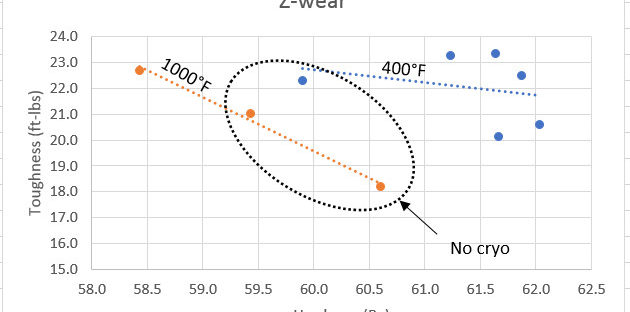
I recently completed some toughness tests on samples that were heat treated by knifemaker Warren Krywko. The steel was donated by Chuck Bybee of Alpha Knife Supply. The samples are subsize unnotched charpy specimens with dimensions as specified on the bottom of this page: http://knifesteelnerds.com/how-you-can-help/ If we can get more people to make toughness specimens we can have more comparisons between steels, hardness points, heat treatment parameters, etc. Patreon dollars are for the purpose of paying for machining, shipping, testing, etc. for tests like toughness and CATRA edge retention, so if you are able to contribute that way please visit the Knife Steel Nerds Patreon page.
Warren likes to use CruWear and PM Z-wear in his knives because he likes its combination of good toughness and wear resistance along with high hardness. Both are copies of the older VascoWear developed by Vasco, the company that James Gill worked for who I wrote about here: The Development of High Vanadium Steels, M4 and the First Tool Steels Book. James Gill didn’t develop VascoWear but I won’t be writing about the history of VascoWear in this article. Maybe another time. It is also sold by Carpenter as PD-1 and probably other companies under other names.
Warren and I discussed comparing low vs upper tempers (400 vs 1000°F), with and without cryo, and the ingot version vs the powder metallurgy (PM) version of the steel. Crucible shows a significant increase in toughness for the PM version [1][2] so we wanted to see if our toughness testing shows similar behavior. We also saw a big difference between them:
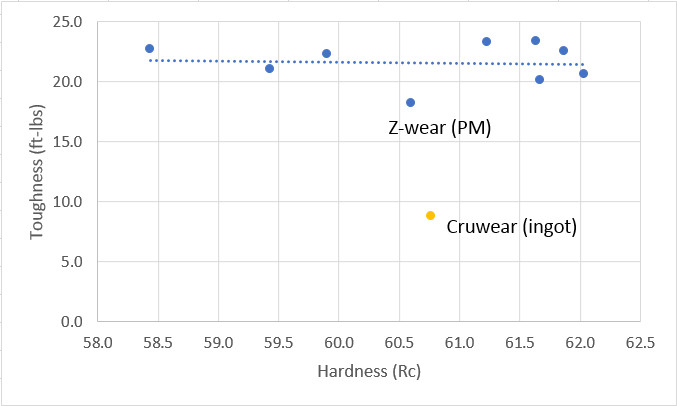
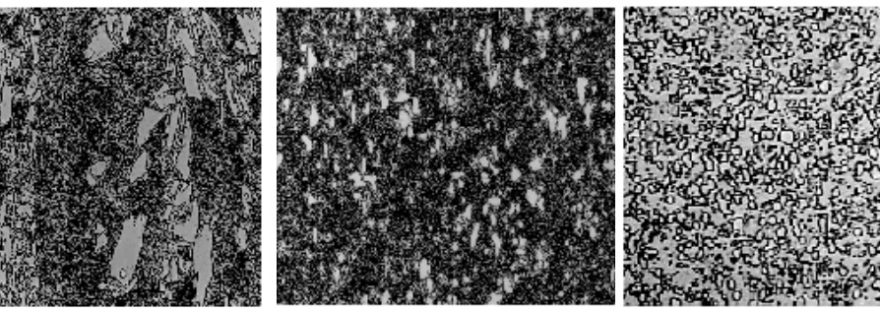
This makes sense because of the great refinement of the carbide structure from the powder metallurgy process. You can see a comparison between micrographs of ingot and PM 154CM in this article:
Micrographs of Niolox, CPM-154, and AEB-L
I consider this site an excellent source for information, I learn something every time I visit.
Have a Bench Made Tagged Out Magna cut. Very tough so far
Ciao Larrin,trovo molto utile questo sito,
Avrei una domanda riguardo all’acciaio A8mod:come é meglio temprarlo per raggiungere la massima durezza?