Category: Heat Treating and Processing
3 thoughts on “Heat Treating and Processing”
Leave a Reply
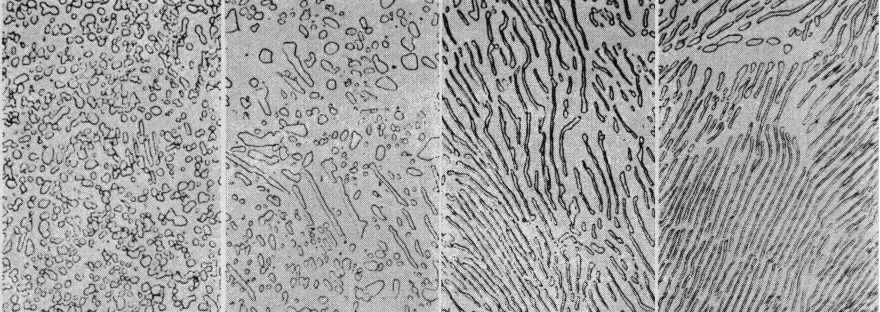
How Annealing of Steel Works – Subcritical vs Transformation Annealing
Thanks to Larry Corsa and Gene Kimmi for becoming Knife Steel Nerds Patreon supporters!
Why Anneal?
There are three primary goals of annealing steel:
- Make the steel machinable so that it can be easily cut, drilled, and ground.
- Setup the steel for austenitizing and quenching (hardening) so that is has good heat treating response
- Provide the best possible properties in the final heat treated product
The above goals are not always 100% compatible, but we would like to offer the optimal combination based on our priorities. However, to know what the trade-offs are we need to know how annealing works first.
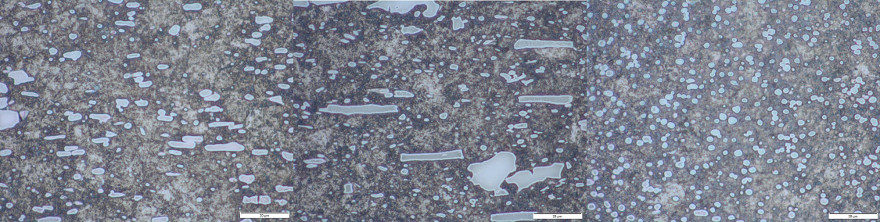
New Micrographs of 42 Knife Steels
10/15/2020: I added M398, WFN, Nitrobe 77, and Vancron
2/24/2020: I added 420HC, CPM-T15, Rex 76, S125V, SPY27, and Z-Max/Rex 86
2/10/2020: I added 26C3, 1.2442, 1.2519, 1.2562, Blue Super, V-Toku 2, and A8 Mod.
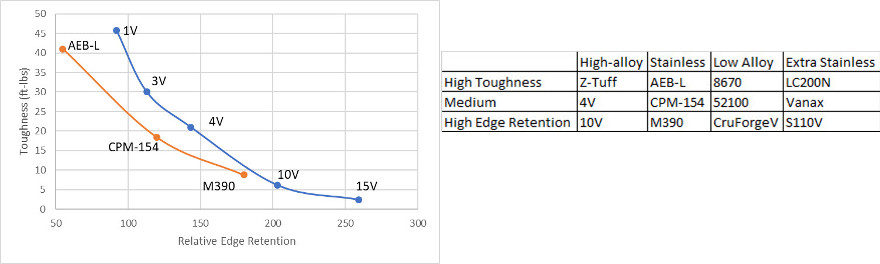
How to Pick the Best Steel for Every Knife
Update 2/19/2021: In the recommendations section I updated a few of my recommendations based on new experiments and new steels.
Thanks to Mau, Benjamin Amaral, Karolis Griskevicius, Dan Frazier, and Jess Hoffman for becoming Knife Steel Nerds Patreon supporters! We are now over 100 supporters!
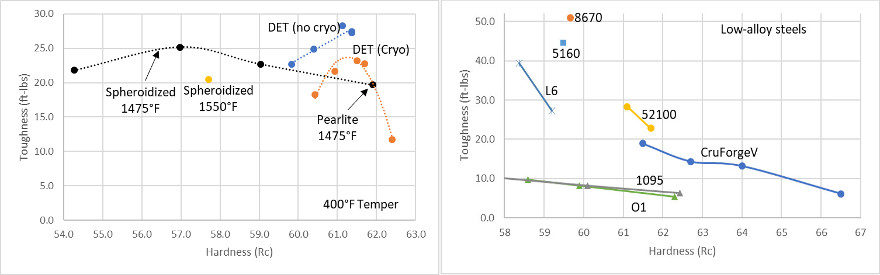
How to Heat Treat 52100
Thanks to Lev Serebryakov for becoming a Knife Steel Nerds Patreon supporter!
52100 Steel
I previously wrote about the history and properties of 52100 in this article. The steel has been around since 1905, has been known as 52100 since 1919, and has been used in knives since at least the 1940’s. It was developed for bearings and its common use in bearings meant it has been a ready source for knife steel for decades. It is known for its fine carbide size and good toughness. The chromium addition compared with the chromium-free 1095 means that it has somewhat higher hardenability so it is easier to harden in oil and obtain full hardness. The chromium also helps keep the carbide size small. The chromium also shifts up the temperatures required for hardening.
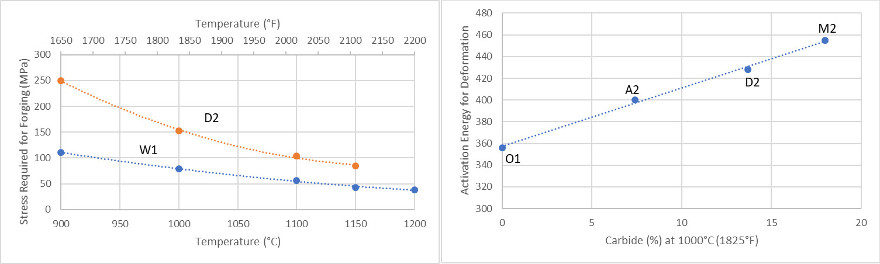
Which Steels are Easiest (and Most Difficult) to Forge?
Thanks to Richard Airey for becoming a Knife Steel Nerds Patreon supporter!
Forging Steel
Typically forging bladesmiths have restricted their steel selection to low alloy steels like 1095, 1084, 5160, 52100, O1, etc. There are a variety of reasons given for why the bladesmiths usually use these relatively simple steels. Often “ease in heat treatment” is a common one. However, this article will focus on which steels are physically more difficult to deform with the hammer and which crack most readily. What controls “forgeability” or steel?
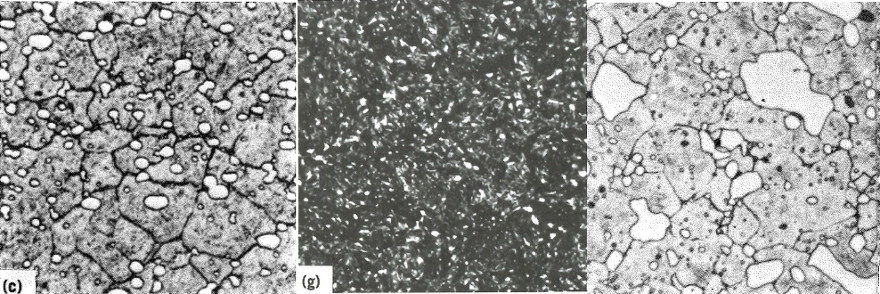
A2 Steel – History and Properties
Thanks to Dan Pierson, Steve R. Godfrey, Bryan Fry, and Timothy Becker for becoming Knife Steel Nerds Patreon supporters!
History
A2 steel is quite old, though determining the exact year it was released is a bit difficult. A2 steel was developed in the early 20th century during the explosion of tool steels that occurred after the discovery of high speed steel which was first presented in 1900. You can read about that history in this article: The History of the First Tool Steel. During the development of the first high speed steel included the switch from manganese to chromium as the primary hardenability element, and most high speed steels had about 4% Cr. That high chromium content was primarily for “hardenability” which is the degree of cooling required to achieve full hardness. A “water quenching” steel has low hardenability and must be quenched very rapidly from high temperature, and an “air hardening” steel can be left in air and it will fully harden. You can read more about hardenability in this article on quenching. The first high speed steel came to be known as T1, which had 4% Cr and 18% W (tungsten). The earliest record I have found of a precursor A2-type steel is in a summary of tool steels in 1925 [1], while summaries of tool steels from 1910 [2] and 1915 [3] do not have any similar steels. Therefore these types of steels probably arose sometime between 1915 and 1925.
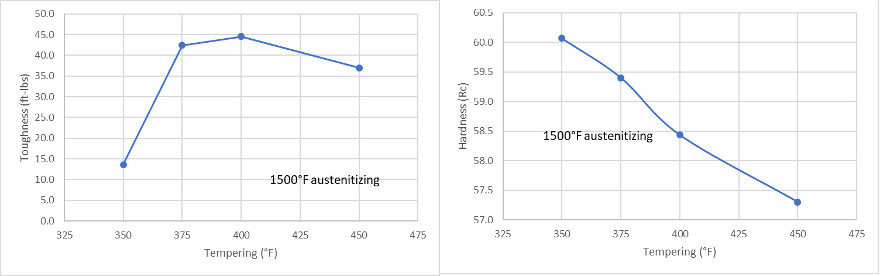
How to Heat Treat 5160 – Optimizing Toughness
Thanks to Lewis, David Abbot, and Nick Shabazz for becoming Knife Steel Nerds Patreon supporters!
5160
5160 is a low alloy steel known for its excellent toughness. It has been used by many forging bladesmiths due to its good properties and also wide availability, especially in the form of leaf springs. However, information on how to maximize the steel’s properties with heat treating is scant. So along with my father, Devin Thomas, we did a small study on the toughness of 5160.
Heat Treating Vanax – How Hard Does it Get?
Thanks to David Suitor, Drakopoulos Stelios, and Maxim Bellehumeur for becoming Knife Steel Nerds Patreon supporters!
Vanax
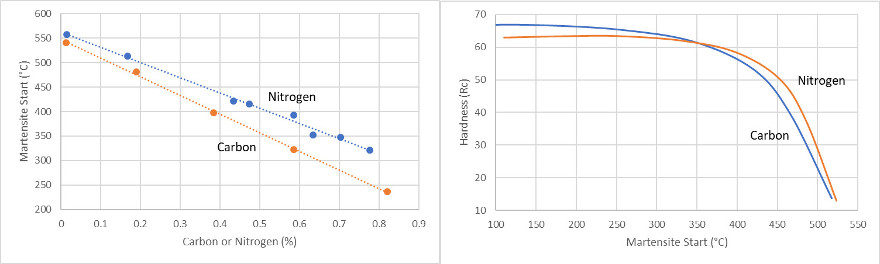
Vanax is an interesting steel because of its good combination of toughness, wear resistance, and corrosion resistance. I wrote about Vanax along with other nitrogen-alloyed steels in this article, to describe how the steel is designed. While the datasheet shows it being capable of 59-61 Rc, I was curious about how hard the steel can go. The steel may be good for kitchen knives, for example, where very thin edges and high hardness is common. And kitchen knife users may appreciate the excellent corrosion resistance of Vanax in the presence of water, salt, and acidic foods.
Can You Trust Your Magnet During Heat Treating?
Thanks to Damion for becoming a Knife Steel Nerds Patreon supporter!
How a Magnet Helps in Heat Treating
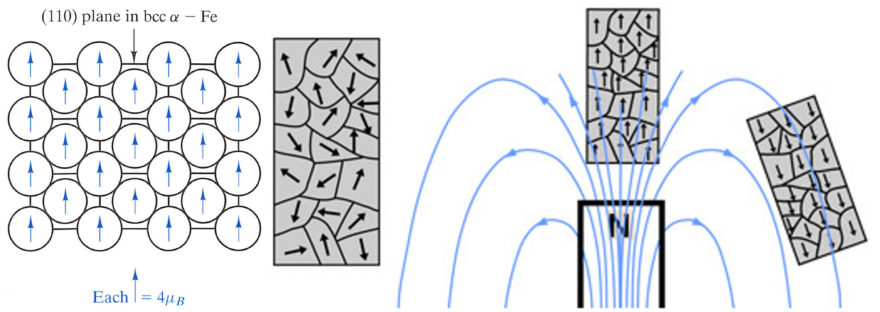
It is somewhat common for knifemakers to heat treat low alloy steels in a forge or with a torch, two methods where tight temperature control is not possible, and the temperature is frequently not even known. A magnet is often used to check the temperature of the steel because the point at which the steel becomes nonmagnetic is near the temperature at which the steel should be quenched to achieve high hardness. How does steel magnetism work? How reliable is checking the steel with a magnet?
Cold Forging of Steel
Thanks to Marco Guldimann, Darrin Thomas, Jason Tillostson, Dominic Paolantonio, Ken, Benedikt Peters, and Steve Greiner for becoming Knife Steel Nerds Patreon supporters!
Cold Forging
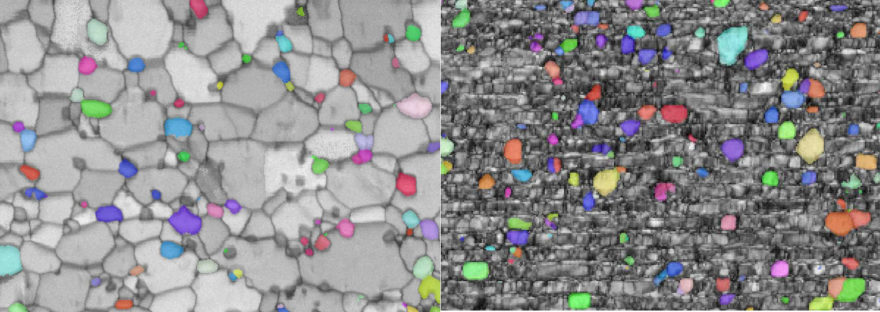
Cold forging is a lot like hot forging except it is at or near room temperature. The lower temperature means that the steel is much stronger and it is much more difficult to forge. That also means the steel is more brittle and therefore more likely to crack during forging or rolling. The shape of the grains in the steel are changed through forging. You can read about what grains are in this article. Steel is made up of planes of iron atoms, and if the steel was made up of only one grain these planes of atoms would all be parallel to each other:
I consider this site an excellent source for information, I learn something every time I visit.
Have a Bench Made Tagged Out Magna cut. Very tough so far
Ciao Larrin,trovo molto utile questo sito,
Avrei una domanda riguardo all’acciaio A8mod:come é meglio temprarlo per raggiungere la massima durezza?